Would you consider it “work” to listen to a favourite album?
That’s how it felt as I slowly became accustomed to the new sound system in my right ear. The cochlear implant had been installed surgically by Dr. Lin and the team at Sunnybrook Hospital in late 2017. Hearing speech in that ear was better already, but music tended to sound chaotic; I avoided it.
The first few months, my homework had been focused mostly on the sound of language. I streamed two programs directly into my right ear from my Ipad, and made educated guesses about the words, sentences and sounds I was hearing.
An online program called Speech Banana focused piece by piece on all the consonants and vowels in the English language. Another program, Angel Sounds, explored language as well as environmental sounds such as a dog barking, or a siren wailing. It also featured a music test to distinguish different pitches. I had a tough time with that one, often hearing the same note when, in fact, it had risen a whole tone or two (shown on a visual chart). Gah!

But with practice, I got better. My brain was getting accustomed to a new auditory input. I tried to put in an hour or two of listening homework each morning. My scores increased. I added my left ear to the mix, with its conventional hearing aid and sometimes distorted hearing.
To inject levity, I watched Stephen Colbert’s daily YouTube clip — basically his take on world news and clever skewering of the orange-haired one and his antics in the U.S. Then I added the two Jimmys — Fallon and Kimmel — to my hearing homework.
The combo of video and sound helped a lot. Even for a person with normal hearing, seeing someone’s lips improves comprehension.
I was nervous about adding music to the mix, as the Meniere’s condition in my left ear still created distorted sound. Singer Huey Lewis recently spoke about the impact of Meniere’s, and how he had to stop performing when he could no longer sing in key. I posted a comment to Huey’s Facebook page wishing him the best, hoping his condition may stabilize or he may find hearing technology that will bring the music back.
Stories and emotions
YouTube certainly had a tempting variety of music. I searched for Lennie Gallant, an east-coast folk musician we had seen perform live a couple of times. Once, during a break in his performance at Toronto’s Hugh’s Room, I had found myself side by side with Lennie at the urinals in the men’s room. Thinking it was not the best time to bother him, I chatted with him later that night and bought his CD, When We Get There. I grew to love its mix of stories and emotions, including songs sung in both English and French. A musical craftsman.
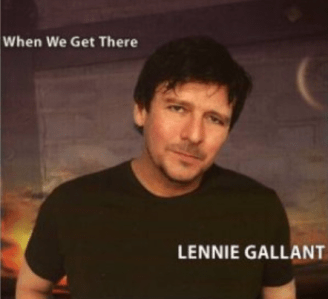
My daughter Ali had once played Lennie’s music on her laptop for me while we drove to her university home in Hamilton, Ontario — holding the device close to me in the car while I was having a rough spell with my hearing.
Now with my YouTube search, up popped Lennie’s song about love and loss: Pieces of You. I pressed play. I had not heard it in a couple of years but knew the song well and could immediately lock on to the pitch and melody of his vocal. Seeing Lennie sing it helped me hear it as well. The music mix slowly came into focus in the background. I felt hairs tingling on my neck, knowing that there was some hope to enjoying listening to music again.
Listening to music is work, though. Another favourite album was Gordon Lightfoot’s A Painter Passing Through. It is a hidden gem among his more popular songs and albums. I dropped my CD into the player in our kitchen and winced at first when I heard the first song, Drifters, a tribute to the cast of characters in bars and music joints. Focusing on Gordon’s vocal, I could slowly put the rest of the mix into place.
A fuzzy image comes into focus
I could follow the bass progressions a little bit. The percussion sounded crisp. The song was coming together like a fuzzy photograph coming into focus. I was hearing it through the triangle formed by 1) my memory, 2) some amplified hearing in my left ear, and 3) a new implant in the right ear, delivering sound straight into the cochlea: “Whether it’s right or wrong, the words of every song, remind us of the love we knew when love could not go wrong, in yesterday…”
When I say that the first factor to hear a familiar song is my memory, what I mean is that my brain knows what the song should sound like. Somewhere in between that memory and the actual new sound input, there is a fusion of sorts.
I made a habit of playing the CD while preparing supper. Each time I listened, Lightfoot’s musical tapestry became more vivid.
I had a few hearing homework setbacks, like “The Completion Backwards Principle,” a classic album by The Tubes. It is a zany, rock music spectacle with a satirical premise, but music better left intact in my memory at the moment. Too chaotic for me to follow these days.
Finally, a friend had mentioned a top-flight Scottish percussionist who also happened to be deaf: Evelyn Glennie. I found her TED talk on line….
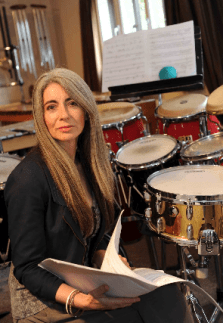
Evelynn had lost most of her hearing as a young girl. As she pursued a career in percussion, she experienced music not just through sound but through sight, feeling, intuition, and the kinetics of the human body.
In her TED talk, as she approaches the marimba to perform, Evelyn takes off her shoes. Percussion and music can be experienced through the feet, arms, hands, head. The body as a resonator — the mind open to experiencing music in multiple ways.
Evelyn is not just an internationally known percussionist, but a champion of music for all, including people with different abilities. She has pushed the music education system and community to see beyond prejudice, to see a universe of musical opportunities for us.
Such rich musical artistry and ideas. So much hope.
 kinrosscordless