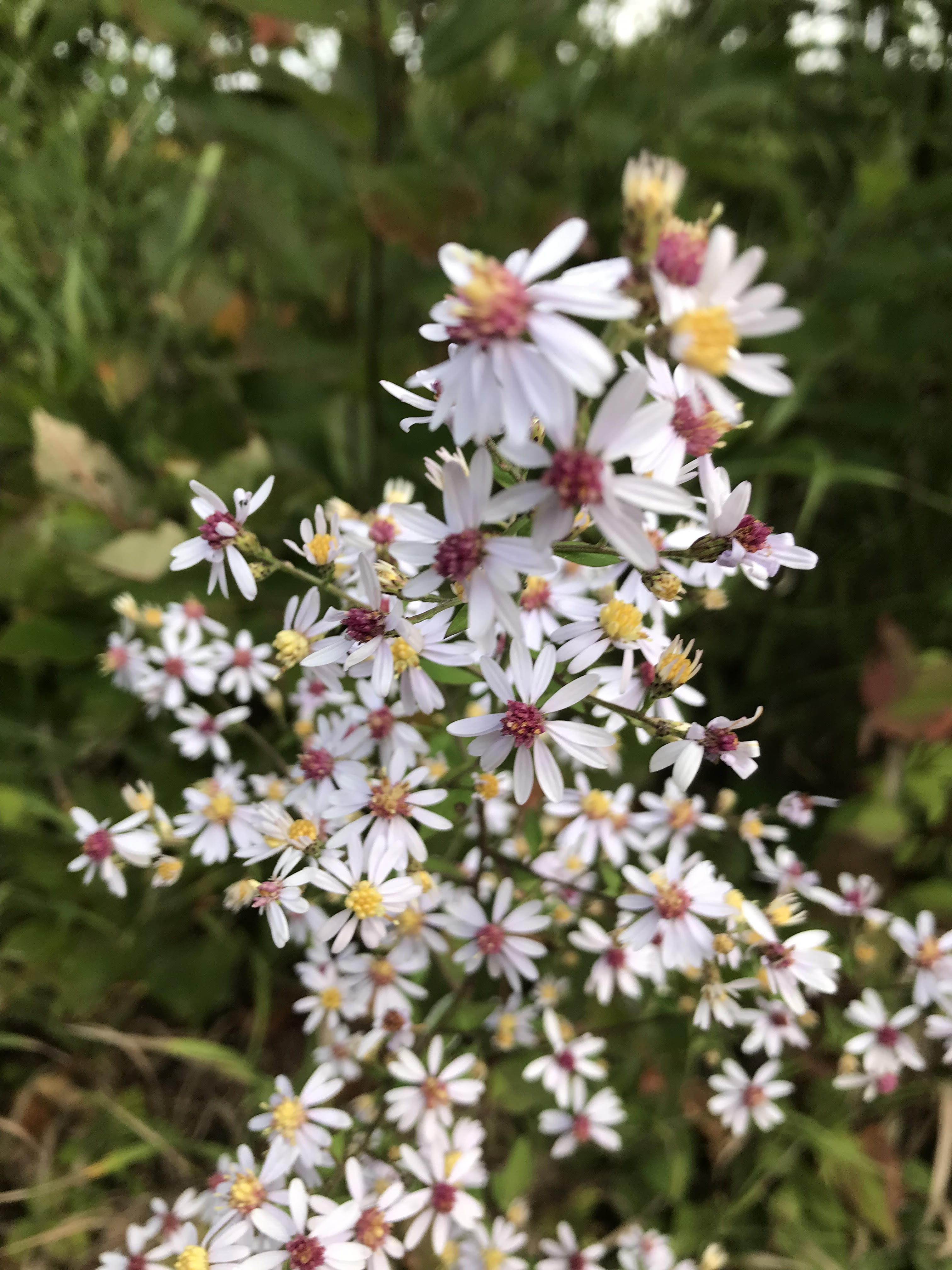
The first fall colours in Minden Hills are subtle — the purples and whites of wild asters blooming in September on the roadside, yellow goldenrod, the browns and beiges of forest fungi, green milkweed pods ripening. Not quite the splendor of traditional fall colours — of maple and other hardwoods we will see in October — but just as rich and diverse in their own way.
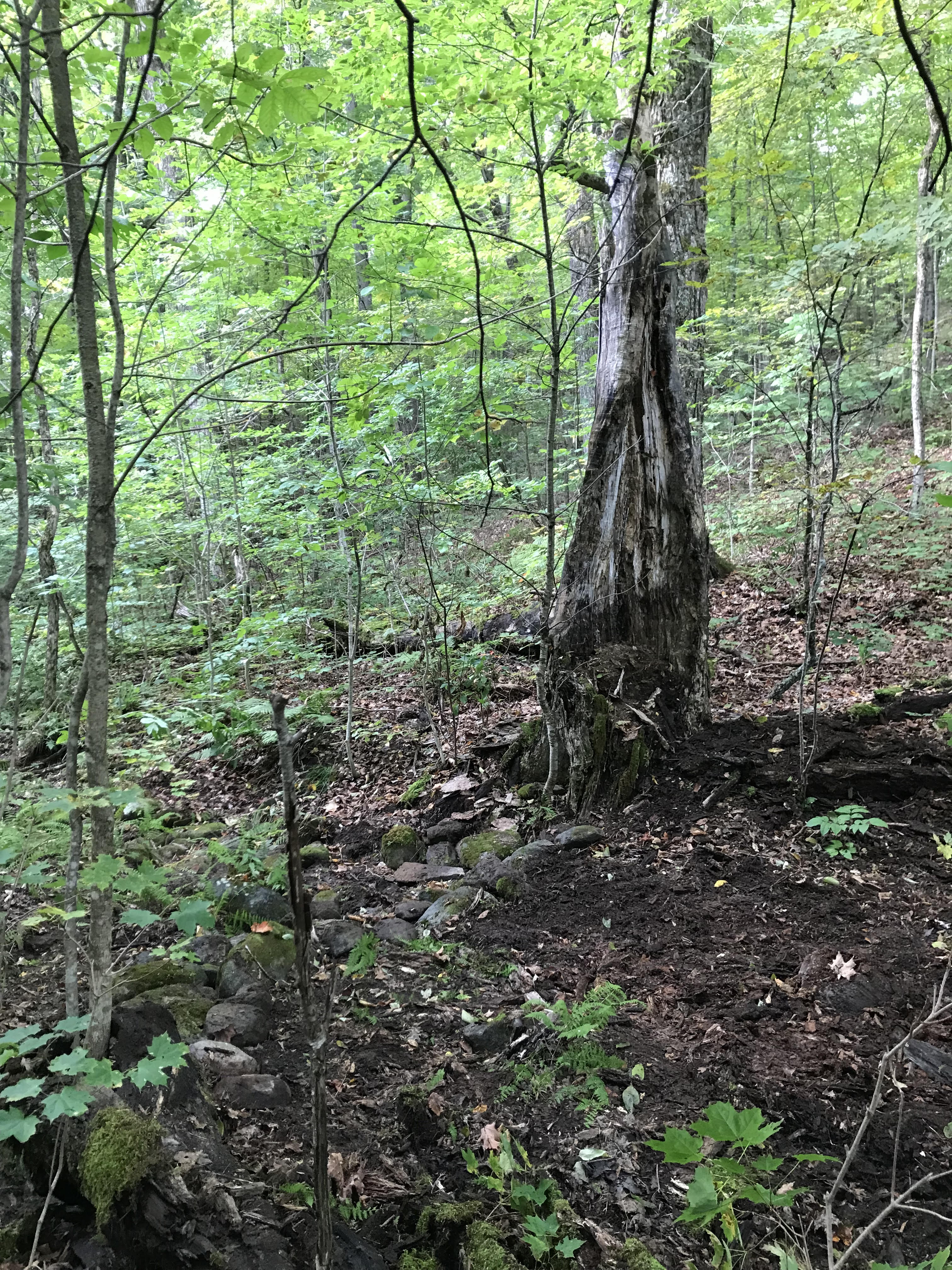
Kinross Creek is bone dry downriver of the two “check” dams built this spring. As the nights get longer with heavier dew, the creek should flow again soon, spilling into Ali’s pond with its stone semicircle smile. The creek is in the woods near the hydro corridor, about a 40-minute hike from our cottage.
I use the opportunity to wander along the dry creek bed, downriver to the edge of the valley, the spot where Kinross Creek transforms to a cascading waterfall when the snow melts each spring.
There are hundreds of stones of diverse shapes and sizes revealed in the dry creek bed today. For someone who likes working with stone, this is mecca.
A site for the next check dam presents itself. The top of a huge dead tree has fallen across the creek. When the water ran here earlier this year, the deadfall created a natural pond. But it also diverted the flow of the creek to the side, away from its original course. The remaining vertical tree stump is a sentinel, about 8-feet high, marking the spot.
So I start to pull away the fallen part of the trunk and limbs from the creek bed, to replace them with the next stone check dam. This stone feature will restore the original creek course and feed into Colleen’s pond just downriver.
The woods are still and cool — no bird song but for the occasional screech of a Blue Jay and coarse cry of a crow. The mosquitoes and blackflies that pestered me over the past few visits have vanished.
I mine maybe 25 stones from the dry creek bed and arrange them into the start of a one-rock-high check dam, following the contours of the original creek bed. After a few minutes, I realize my heart is thumping pretty fast — my stonework excitement seems to be giving me a cardio workout.
With the tree cleared and first stones in place, I start to head out, but stumble upon another small stone-pile in the forest. It’s not quite the motherlode, but will add 20 stones to this effort.
In the woods around here, even though I keep my eyes peeled for stones, it is often my feet that find them. When one sticks out of the forest floor to catch my foot, it is typically the tip of an iceberg of many stones — likely piled up by farmers who worked this area before the farm was abandoned.
Likewise, it is often my feet that find remaining relics of barbed wire fences strung perhaps 75 to 100 years ago. When a jagged piece of wire threatens to snare a human rambler, I bend it back out of harm’s way.
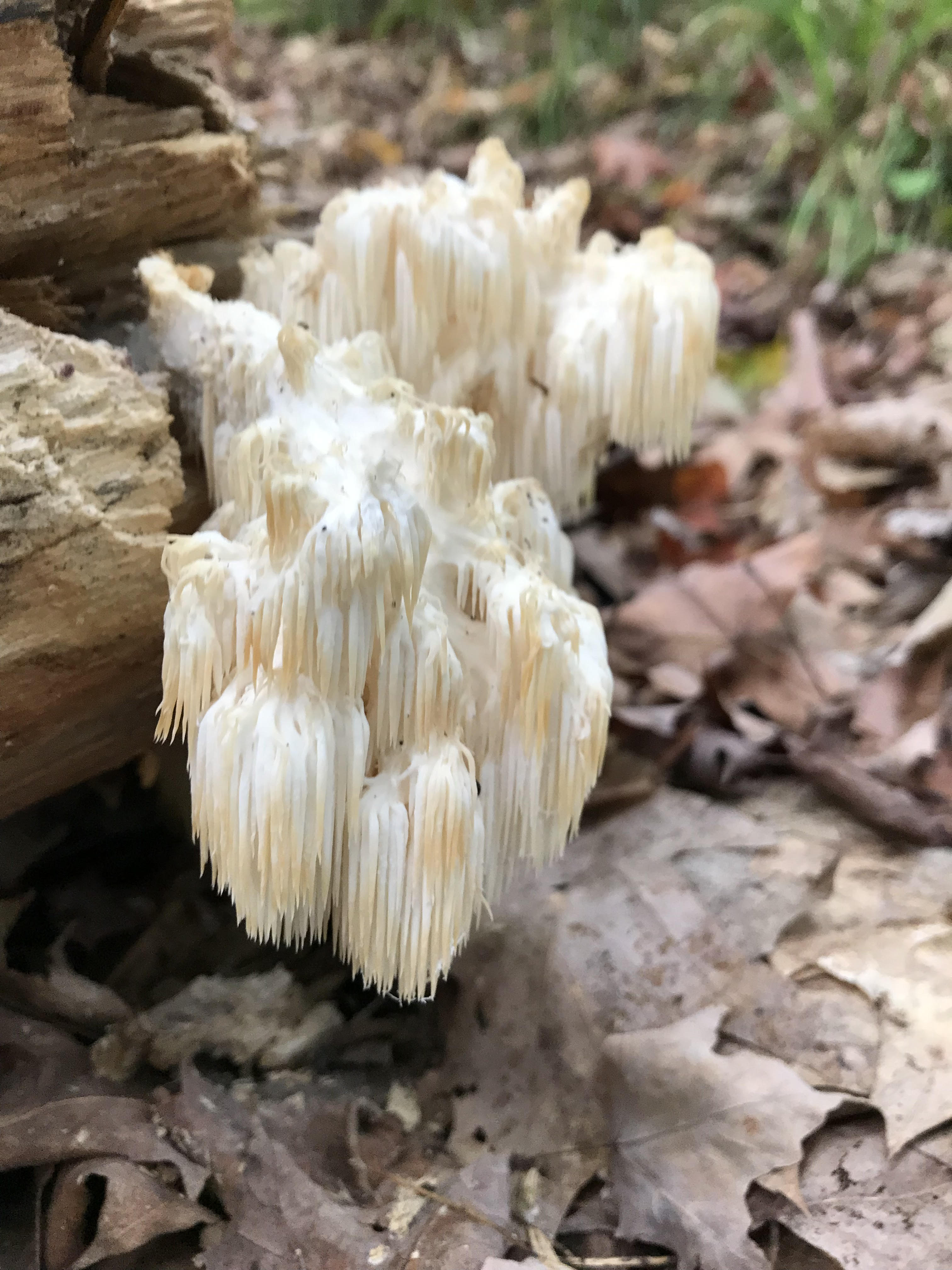
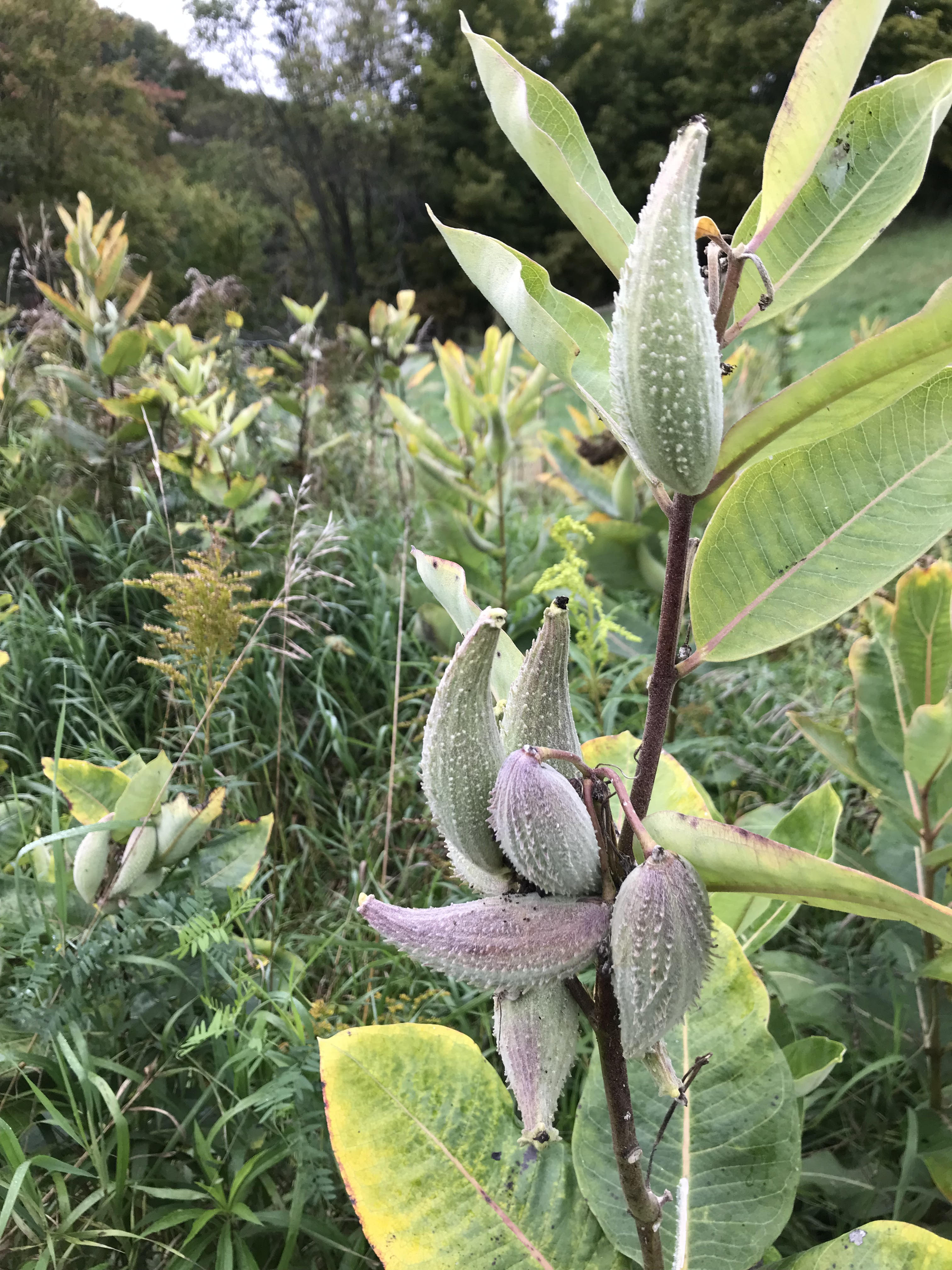
The cool weather and subtle colours of early fall make for a nice walk back, after the heat of mid-summer. I come upon a strange and splendid drooping fungi, hanging from the end of a log. Milkweed pods swell and will release their feathered seeds to fly away later this fall.
I’ll be back in October to check the creek flow and start work on the next pond.
 kinrosscordless
Sounds nice and great pictures.
Thank you Ward. It makes my journey longer because I keep stopping to take pics of wildflowers. (:
Love your tales of Kinross Creek. A modern-day Walden Pond, with a rock-hound lean.
Thank you Darcy, definitely some parallels around how nature forces us to pay attention and appreciate. And I accept my new role as rock hound. (: