Unknown's avatar

About Ian Kinross

I am a Toronto-based writer and communicator. I volunteer at the Thorncliffe Park Community Garden and recently learned the skill of dry stone wall building. I've been known to mess around with bicycles. I would like to thank Karen Maraj and Nicky Borland for their inspiration and support to kickstart this blog. Also thanks to Hannah Materne for design of the kinrosscordless logo. I appreciate your comments.

On the road with Bruce the Moose

“Break it to them gently.”  That’s what the owner of a roadhouse in Geraldton, Ontario did when he fired our rock band, Bruce the Moose.

We had been booked for a one-week gig, way up in Lake Superior country, playing rock, blues and a few original songs for a motley crowd of forestry and hydro crews, bikers, and locals. We thought it had been going well.  We made a few fast friends in the audience and even allowed some enthusiastic patrons to join us on stage to belt out their favourite songs, or jam with us on harmonica.

Bruce the Moose

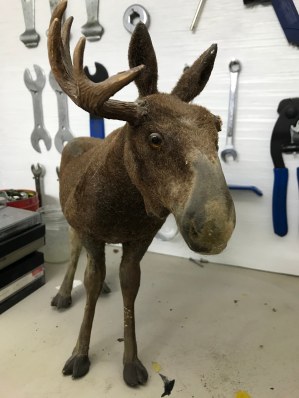
The original Bruce the Moose, minus one antler, poses in front of some old guy’s bike tools.

But after we played the Monday to Thursday segment of our gig, the hotel owner dropped the bomb.

“Hey guys, you’ve been great, but I’ve got strippers coming in this weekend, so I don’t need the band.”

Gulp. We had been usurped by exotic dancers.

“But listen… My buddy runs the hotel in Beardmore down the road. He’s taking you on for the weekend for $500. You’re going to end up making more dough this week!”

Now you’re talking. We would end up making $1,300 for the week instead of $1,100.

We packed our gear into our brown van, the one with the brown shag carpeting inside, floor to wall to ceiling and back again. Some of the letters had fallen off the nameplate on the front hood. So now instead of being a Dodge, our van was a Dog. Our enormous brown Dog was powered by an undersized but sturdy slant six engine that burned oil.

The town was buzzing

We got to Beardmore and set up for Friday night.  The place was buzzing as the town had not had a live band play in its hotel for several years. Two young women came by to chat.  “We hear you guys stopped for Coke and O’Henry bars at the variety store.”

“Oh hi, wow. Actually, how did you know that?”

“Everybody knows there’s a band coming to town; word travels fast I guess,” replied one of them, Donna, whose nickname was Cowboy, matching the big hat she wore. Her friend was Penguin.  I was a bit confused by the nicknames but they were really nice.

We knew we had to step up, and for the next two nights we had a lot of fun. It seemed like the whole town came out to see us play, to dance, sing along and kibbitz.

We had a good long set list, so kept it fresh night to night.  We had a blues set, in which we all donned sunglasses like the Blues Brothers. We played a couple of songs from the classic Dan Ackroyd/John Belushi album popular at that time. We hammered out a couple of ZZ Top songs, some slick Powder Blues, and some original blues songs. John played keyboard and lit into the blues vocals; he sent his synthesizer soaring on solos, eyes closed.

We were high school friends from Don Mills Collegiate Institute. We had practiced in the band room there after hours, thanks to our talented, dedicated, generous, if sometimes grumpy, band teacher, Al Harkness. Our parents also had extreme patience as we honed our craft playing amplified music in their basements and garages. We would play ZZ Top’s “Tush” at full power in John’s basement, then afterwards his sweet British parents would offer us tea and biscuits and tell us: “Well done boys, it’s sounding quite good!”

The Moose’s backstory

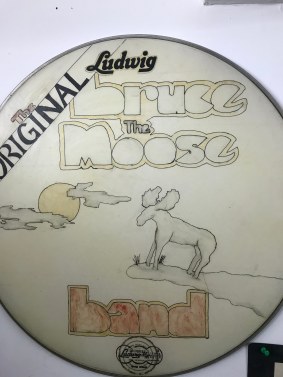
The name of our band was derived from an antique moose handed down from the Kinross side of my family.  It’s the type of artifact you’d take to the Antiques Road Show.  John, who would go on to a career in music performance and recording, used his artistic skills to paint the band name on the front skin of my Ludwig bass drum: Bruce the Moose.

Bruce bass drum

Music is a about feeling and we gelled on those songs on our summer road tour. We had practiced hard and had been playing five or six days a week. We could lose ourselves in the feeling of the music, like The Doors songs we performed. “Try to set the night on fire!” You can’t help but get hypnotized by that song.

Or “L.A. Woman”, where Steve, on bass guitar, channelled Jim Morrison on the lead vocal. Steve laid down a nice bass line on his blond lefty Fender, but because lefty instruments had been hard to find, he could also switch-hit if necessary on a righty bass played upside down. Joe played rhythm guitar and then would speak in tongues on his lead guitar solos, sometimes venturing into wild territory on key signatures, rhythm and scales: major, minor, mixolydian, you name it. He got a nice ovation from the crowd for his work. I was back on drums keeping the beat and sometimes singing some backup vocals.

Turn me loose!

The good folks of Beardmore were dancing and wanting to party with us during break. They had song requests, some of which we could take. We had to disappoint one of our biggest fans though. Through most of the night, in between songs she kept screaming out: “Turn me loose!”

Hey, it’s a great song, but we hadn’t practiced Loverboy.

Steve recalls: “The Roxy Hotel in Beardmore was packed and rockin’. We finished a song and some older dude comes from the back of the room shoving his way to the stage. He’s got a drunken grimace and a clenched fist in the air. He gets closer and I think we were ready for some kind of altercation but instead he reaches up and shouts “you guys are fuckin’ great!” and hands me a US 20-dollar bill!”

Late at night we hung out and watched some spectacular Northern Lights streak the Northern Ontario sky with shades of green.

The next morning Steve was wearing a red bandana around his neck, obscuring a hickey from Donna. I was jealous. Steve looked like Jim Morrison. I was still in my Richie Cunningham phase. Penguin apparently was not a fan of Ron Howard.

Let’s not think we were too cool. We were fresh out of high school. Two of us were still underage. When one bar owner asked Joe to produce ID, he gave them his North York Public Library card, which did not have a birth date on it. They accepted it and we played the gig.

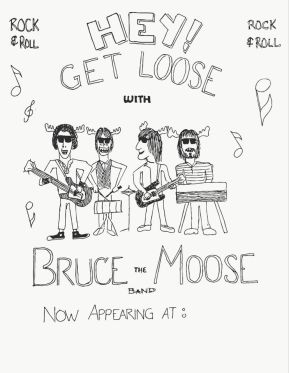
btm poster

That summer of 1981, our trusty Dog van propelled us across Ontario, from Niagara Falls to Minden to Huntsville to Chelmsford to Wawa to Blind River, Geraldton and Beardmore.  And then back south to the Rockcliffe Hotel in Minden, where a bunch of our friends showed up to join camp counsellors, cottagers, locals and, of course, bikers in the audience.

Redcap and vitamin C

We stayed in grungy rooms upstairs with a closet big enough to hold a 24-case of Redcap Ale.  Typical of Ontario hotels, there was a single washroom accompanying the rooms upstairs, so when we took a shower we had to make sure the coast was clear of the old guys whose Canada Pension Plan cheques funded their semi-permanent stay at the Rockcliffe.  One of these characters once came down the stairs in the middle of our set and bellowed: “Can’t you play any country music?”

The bartender at the Rockcliffe was a guy nicknamed “T.R.” from California who drove a Corvette and claimed to be a Vietnam veteran with a metal plate in his head from a war wound. When one of our visiting friends challenged his claim after too many drinks, some quick mediation and changing of the subject was in order to prevent a scene from Platoon.

“It was a wild ride that summer and I didn’t want it to end,” says Joe, now a professional guitarist in south-western Ontario. It was also a blur for Joe because he played many of the same bars with different bands in later years — “same bars, sometimes different names.” Joe recalled an incident in Huntsville where a friend of our band took off at night in a canoe and we were scared for his safety. The police were called and “it could have been a case of CUI — canoeing under the influence.”  However the police took kindly to the situation and let our friend off with a warning.

A quick note about nutrition. As we were on a shoestring budget, we ate just two meals a day.  Waking late, we would go for a big breakfast, typically bacon and eggs and coffee.  Then a western sandwich or burger or grilled cheese special for supper.  A couple of venues offered us beer at cost during the show; those calories were welcome. Finally, we tucked into Joe’s huge supply of Vitamin C pills at all hours.

That Rockcliffe gig was the highlight and twilight of our summer road tour.  We packed up our instruments and sound system and took our last trip home in the Dog. School and jobs and girlfriends and new destinations beckoned in the fall. We were mostly broke and could use a short break from each other after being together 24/7.

We were moving on, like the line in the Burton Cummings ballad:

“Break it to them gently when you tell them that you won’t be coming home again.

*************************************************************************

Epilogue: And I heard from our keyboardist and singer John Brocksom, who has played many roadhouses over his career in music writing, performing and recording:

“It’s all just a blur, or even a remnant of a blur that I might have heard about second hand — seeing the impressive countryside and rolling hills in Norther Ontario, a foggy view from a window in Wawa, throwing myself to the stage during a song (Automobile?) and your shocked looks, sleeping in the van in a hotel parking lot somewhere outside of Chelmsford, staying up all night with Steve writing in Huntsville. Also the hitchiker we picked up somewhere who promptly sat on our cooler and snapped the lid.

I agree the highlight was the Rockcliffe, though I can’t for the life of me figure out how (and why) all those Don Mills friends got there.”

Editor’s note: The Rockcliffe Hotel closed just a few years ago. A Canadian icon, it is in dire need of TLC and can be had for a song: under $400K. Here’s to more music memories at the Rockcliffe and Ontario’s hotels and roadhouses that have supported live music for so many years. 

Music magic with Barry’s band

Saxophone getty image

For his 75th birthday, Barry had treated himself to a gorgeous shiny-black grand piano. I sat on the drum kit just to his right. Just across the room, Barry’s wife Lois was putting on the strap of her banjo, which she strummed in a jazz rhythm style. Completing our rhythm section was a bass player, busy tuning his gargantuan stand-up instrument.

Barry had arranged the scores for that evening on his piano stand and, as band leader, he would call out charts and tunes.

I was lucky to be the back-up drummer in Barry Cartwright’s weekly jam session in North York. It was my last real music gig.

Barry’s the father of one of my high school friends, John Cartwright. John and I had played in our high school stage band; he had a sure touch on tenor saxophone, and I was back on the drum set keeping the beat.

Barry is a long-time jazz pianist who brought together musicians for weekly jam sessions at his home for many years.

“I’ll be there”

As back-up drummer, I was a bit like that Zamboni-driving emergency goalie who helped Carolina defeat Toronto awhile back. Once in a blue moon on a Wednesday night, I’d get the call from Barry:

“Ian, we need a drummer tomorrow. Can you make it?”

It was nice to feel wanted, knowing I could step up when the regular drummer was on the shelf. And unlike the emergency goalie, I got to play dozens of times over the years. “Okay Barry, I’ll be there.”

A typical night with Barry’s band started late, around 8 p.m.  My Ludwig drum kit was on long-term loan in his basement, so I just showed up with a pair of sticks and brushes.

Structure and soul

Over the course of the next four hours, Barry’s band would work its way through many charts and music styles from jazz to dixie to latin. Take a typical jazz standard like “All of Me.” The beauty of the song is the mix of verse and chorus, structure and freestyle.  The band plays together through a verse and chorus, then one by one, musicians playing instruments such as trumpet, trombone, clarinet and saxophone would have a go at soloing.

I recall Mr. Hallam, another father of a high-school friend, playing soulful clarinet solos, his sound soaring over the band while his torso twisted in empathy.

An elderly trumpet player — I will call him Bill — blew confident, melodic solos, sometimes using his mute to give sensitive contrast. When Barry called out a chart, Bill would give his thoughts on the mood of the song, to get his head around it before he played — “That’s a dreamy kind of number.”

Barry would take a turn at a piano solo, his adrenaline up, his arms and white hair flying. And once in awhile, the rest of the rhythm section would also get to freelance. For me on drums, sometimes the band “traded fours,” giving me alternating four-bar spots to adlib my way around the drum kit.

Then the full band would fall back into formation and go full power for the final chorus and finale.

Our motley musical crew played until midnight! We enjoyed a rollicking evening of music, breaking only for a chat over beer and beer nuts. During break, some of the musicians recalled their gigs in the glory days of big bands, back in the day when a trumpeter could earn money as a professional musicians. A few still played gigs from time to time at special events.

Midnight magic

When the clock hit midnight, more magic.

Lois would have put down her rhythm banjo around 11:30 p.m to sneak upstairs to the main floor of the couple’s spacious split-level home.

When the music stopped, we also headed upstairs to a midnight feast prepared by Lois — apple pie, cheese, coffee and other goodies. A chance to reminisce, recap the evening, talk about music, wish others well.

I was the “young guy” in my 40s and 50s, while many of the musicians in Barry’s band were well into their 80s. But they would tire me out. I’d be sitting eating apple pie afterwards, in the wee hours of the morning, thinking, “I gotta work tomorrow.” Then I would drive home in a blissful state through the darkened and empty streets of T.O.

I recall the last time I saw Bill the trumpet player, he of the dreamy touch on muted trumpet. I noticed he had small IV tube in his arm.  He had brought along a few favourite record albums that he wanted to give away, and during the break he got a few takers.  About a month later, Bill passed away in his sleep one night, after playing his final evening session with Barry’s band, and taking his coffee and pie at midnight as usual.

I ran into Mr. Hallam the clarinetist a while ago. He was doing well, still playing, although he told me Barry’s weekly jam session had ended. My phone no longer rang on a Wednesday night. I had been out of the loop for awhile. Sadly, Lois had passed away.

What a legacy. Barry had propelled his jazz band into his early ’90s, his fingers dancing on the keys of his grand piano. So much music over the years. So much pie, coffee and midnight chats, so much joy.


Doing my hearing homework

Would you consider it “work” to listen to a favourite album?

That’s how it felt as I slowly became accustomed to the new sound system in my right ear. The cochlear implant had been installed surgically by Dr. Lin and the team at Sunnybrook Hospital in late 2017. Hearing speech in that ear was better already, but music tended to sound chaotic; I avoided it.

The first few months, my homework had been focused mostly on the sound of language. I streamed two programs directly into my right ear from my Ipad, and made educated guesses about the words, sentences and sounds I was hearing.

An online program called Speech Banana focused piece by piece on all the consonants and vowels in the English language. Another program, Angel Sounds, explored language as well as environmental sounds such as a dog barking, or a siren wailing.  It also featured a music test to distinguish different pitches. I had a tough time with that one, often hearing the same note when, in fact, it had risen a whole tone or two (shown on a visual chart). Gah!

speech banana

But with practice, I got better. My brain was getting accustomed to a new auditory input. I tried to put in an hour or two of listening homework each morning. My scores increased. I added my left ear to the mix, with its conventional hearing aid and sometimes distorted hearing.

To inject levity, I watched Stephen Colbert’s daily YouTube clip — basically his take on world news and clever skewering of the orange-haired one and his antics in the U.S.  Then I added the two Jimmys — Fallon and Kimmel — to my hearing homework.

The combo of video and sound helped a lot. Even for a person with normal hearing, seeing someone’s lips improves comprehension.

I was nervous about adding music to the mix, as the Meniere’s condition in my left ear still created distorted sound. Singer Huey Lewis recently spoke about the impact of Meniere’s, and how he had to stop performing when he could no longer sing in key. I posted a comment to Huey’s Facebook page wishing him the best, hoping his condition may stabilize or he may find hearing technology that will bring the music back.

Stories and emotions

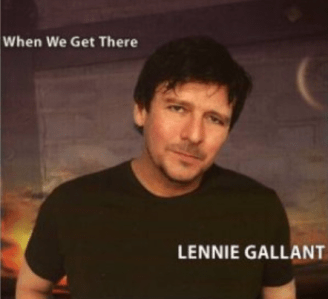
YouTube certainly had a tempting variety of music. I searched for Lennie Gallant, an east-coast folk musician we had seen perform live a couple of times. Once, during a break in his performance at Toronto’s Hugh’s Room, I had found myself side by side with Lennie at the urinals in the men’s room. Thinking it was not the best time to bother him, I chatted with him later that night and bought his CD, When We Get There.  I grew to love its mix of stories and emotions, including songs sung in both English and French. A musical craftsman.

Lennie

My daughter Ali had once played Lennie’s music on her laptop for me while we drove to her university home in Hamilton, Ontario — holding the device close to me in the car while I was having a rough spell with my hearing.

Now with my YouTube search, up popped Lennie’s song about love and loss: Pieces of You. I pressed play. I had not heard it in a couple of years but knew the song well and could immediately lock on to the pitch and melody of his vocal.  Seeing Lennie sing it helped me hear it as well. The music mix slowly came into focus in the background. I felt hairs tingling on my neck, knowing that there was some hope to enjoying listening to music again.

Listening to music is work, though. Another favourite album was Gordon Lightfoot’s A Painter Passing Through.  It is a hidden gem among his more popular songs and albums. I dropped my CD into the player in our kitchen and winced at first when I heard the first song, Drifters, a tribute to the cast of characters in bars and music joints. Focusing on Gordon’s vocal, I could slowly put the rest of the mix into place.

A fuzzy image comes into focus

I could follow the bass progressions a little bit.  The percussion sounded crisp. The song was coming together like a fuzzy photograph coming into focus.  I was hearing it through the triangle formed by 1) my memory, 2) some amplified hearing in my left ear, and 3) a new implant in the right ear, delivering sound straight into the cochlea:  “Whether it’s right or wrong, the words of every song, remind us of the love we knew when love could not go wrong, in yesterday…”

When I say that the first factor to hear a familiar song is my memory, what I mean is that my brain knows what the song should sound like.  Somewhere in between that memory and the actual new sound input, there is a fusion of sorts.

I made a habit of playing the CD while preparing supper. Each time I listened, Lightfoot’s musical tapestry became more vivid.

I had a few hearing homework setbacks, like “The Completion Backwards Principle,” a classic album by The Tubes. It is a zany, rock music spectacle with a satirical premise, but music better left intact in my memory at the moment.  Too chaotic for me to follow these days.

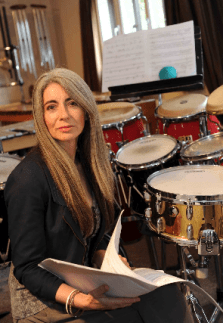
Finally, a friend had mentioned a top-flight Scottish percussionist who also happened to be deaf: Evelyn Glennie. I found her TED talk on line….

Evelyn Glennie

Evelynn had lost most of her hearing as a young girl. As she pursued a career in percussion, she experienced music not just through sound but through sight, feeling, intuition, and the kinetics of the human body.

In her TED talk, as she approaches the marimba to perform, Evelyn takes off her shoes. Percussion and music can be experienced through the feet, arms, hands, head.  The body as a resonator — the mind open to experiencing music in multiple ways.

Evelyn is not just an internationally known percussionist, but a champion of music for all, including people with different abilities. She has pushed the music education system and community to see beyond prejudice, to see a universe of musical opportunities for us.

Such rich musical artistry and ideas. So much hope.


Maximum percussion

I was a teenaged kid clutching a pair of claves — two wooden sticks — on stage at an international music festival. There was nowhere to hide.

With four of my fellow North York Percussion Ensemble musicians, we got ready to perform “Pieces of Wood” at a packed concert hall at the University of Western Ontario.

The composition by Steve Reich introduces and develops a rhythmic theme, syncopated through five performers as each joins in. There is also interplay between the different tone and pitch of each pair of claves.

Usually, us drummers are holed up at the back of the band. We are part of the bedrock of a musical composition, holding and advancing the rhythm, but often hidden behind cymbals, massive copper tympani, music stands, or even tubular bells.

On this day, I felt a little more exposed. I recall my forearms tightening up with nerves before we went on stage. But we had practiced the piece and our program relentlessly.

A rhythmic river

The sound of each clave striking its pair is enriched by cupping the palm under the receiving clave — to create a small echo chamber. Reich’s composition unfolded beat by beat into a rhythmic river, echoing throughout the hall. Hypnotic for us performers, and for the audience.

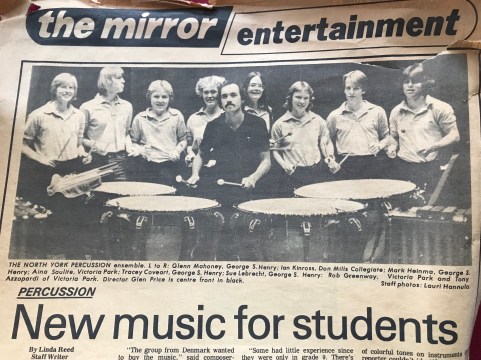
Our musical mentor and percussion guru was Glenn Price. Many of us had taken drum lessons with him. Then he raised the bar by establishing a percussion ensemble at his high school, Toronto’s Victoria Park Collegiate. While studying music at the University of Toronto, he expanded the group into regional collective, bringing together percussionists from many North York public schools. We performed across Toronto and at music festivals including the Kiwanis.

IMG_2450 Mirror photo

Glenn drove us to experience maximum percussion.  That meant going beyond traditional instruments such as a snare drum, to a medley of keyboard instruments such as the xylophone, and learning the music theory, chords, and melody techniques behind them.

Instruments in the percussion family create a palette of musical sounds and textures. “Bells ring, raindrops fall on water and deep chimes sound when these kids get  together,” wrote Mirror reporter Linda Reed in a feature article about the ensemble.

As we practised in advance of concerts, Glenn scrounged percussion instruments from several high schools and his own personal collection to loan to us so we could practice at home — I recall a checklist of vibraphones, marimbas, glockenspiels and other instruments in constant circulation with our group. Glenn and his girlfriend Debbie would ferry us to concerts, cramming musicians and various percussion instruments into old station wagons.

Musical fusion

Maximum percussion also meant bridging classical, latin, pop and other musical forms. It meant rehearsing and performing to achieve the synergy of an ensemble.

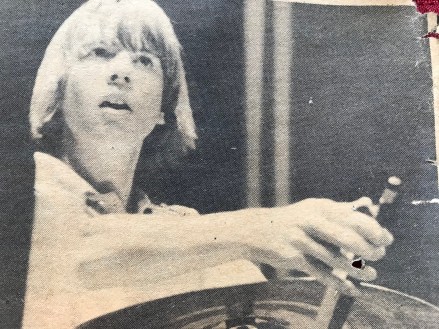
IMG_2446 Ian with cymbal

A violin bow resonates a Turkish cymbal

“We benefited from the discipline of practicing regularly as a group with a very organized and professional teacher,” recalls Ward Cornforth, a percussion compatriot and former member of the ensemble. “I think what I gained the most is the love of performing publicly — the excitement and feedback from the audiences,” said Ward. He also recalls a U.S. road trip with the ensemble, including participation in a drum clinic at the Eastman School of Music in Rochester, NY.

Ward went on to a lifetime of musical performance, most recently as the lead singer and guitarist in a Johnny Cash tribute show — We Walk the Line. Ward added that lessons learned from the ensemble have carried on to the next generation in new ways — his teenaged daughter is pursuing track and field. Her family ensures she has full support as a member of a high-level team.

Glenn certainly pushed us to find new musical opportunities — for me, that meant playing with the North York Concert Band, a gig with at the Canadian Opera company’s summer dinner theatre house band, and touring Ontario with our high school rock band, Bruce the Moose. After university, my percussion performing waned, but I picked up the guitar and piano for fun, and continued to appreciate percussion in any music I listened to.

The beat goes on

Through social media, many of my percussion ensemble musicians reconnected, and had glimpses of how music became a thread in our lives. Rob G. and Tracey recently formed a duo — Hush and Rust — putting new spins and moods on classic songs. Both continue to write and perform original music. Sue shared a video of an all-women band she had just joined as drummer. Ward was touring with his tribute band, channelling 1960s-era Johnny Cash. In the footsteps of two musician parents, Tony’s daughter had become a singer-songwriter. She had recently asked her Dad to play drums on two new tracks in the studio. Barry was subbing in as a blues drummer in the UK, while his son was drumming for a dynamite rock band in Europe. Rob P. was hosting and playing in jazz jam sessions at a coffee shop he owns. And Nick’s daughter sang gorgeous jazz vocals.

Meanwhile, our mentor Glenn had continued his career as a music educator and conductor internationally, inspiring many generations of musicians. He is now Conductor and Director of Performing and Visual Arts at California Institute of Technology (Caltech).

*******************************

On stage at the international music festival on that day in the late 1970s, my forearms had loosened up. The house was packed with musicians from 40 countries at that event, organized by the International Society of Music Education.

Our ensemble was in the zone, arms and hands flying. Reich’s “Pieces of Wood” built to a percussive climax, a wall of sound. Then it ended on a dime — to stark and serene silence.

The audience came out of its trance. A flood of applause. The forearms tingling.


IMG_2448 Poster

Vintage poster from a show we performed at Seneca College’s Minkler Auditorium


Hearing the drums: Who is your favourite?

“Who is your favourite drummer?”

The question caught me off-guard. I was having a post-game beer with three recreational hockey buddies at Amico’s, a gritty Italian eatery on Queen Street West in Toronto. The joint is known for its delicious $10 pasta specials, pizza, and selection of beverages, as well as for its cast of characters and 4 a.m. closing time.

I had set music aside about five years earlier after my remaining good ear — the left one — went haywire from a condition called Meniere’s disease.  I had stopped listening to music as the distorted sound was too painful, physically and emotionally. I could no longer hear the musical tapestry or pitch of a Beatles’ song, or a big band number.

I had also stopped playing music — no longer hacking around on piano and guitar at home. My drum kit was on permanent loan with the band of a jazz pianist I used to play with occasionally. Playing drums with rock bands, concert bands and a percussion ensemble were distant memories.

But after receiving cochlear implant surgery a couple of years ago in my right ear, and using a conventional hearing aid in my still wonky left ear, the music was slowly coming back.

IMG_2410 drum pic

Steve Smith took this freeze-frame image of my hands playing the snare in the mid-80s. Reflected in the background, some older guy uses his iPhone to recreate the photo. 

So when my friend Joe — the stalwart goalie of our McCormick Arena hockey group — asked about drummers, I had to pause.

“I guess I have to go back a few years,” I told him. “Some of my favourite drummers were not virtuosos — they were part of the sound of some of my favourite bands: The Guess Who, Max Webster, and April Wine.”

Sound and mood

Take Garry Peterson, the drummer for Winnipeg’s The Guess Who. His crisp, cool and economical style was the cornerstone of a mesmerizing sound on songs like “No Time” and “American Woman.” He didn’t get in the way, or take the spotlight in tumultuous solos — he was a key part of a special musical fusion. Same goes for Gary McCracken, the original drummer for Max Webster, an innovative and zany rock band out of Sarnia, Ontario. He had an energetic but fluid style that seemed effortless through mood and time changes on a song like “The Party.”

I was blanking on the name of April Wine’s drummer. My friend Steve, who has an encyclopaedic knowledge of rock, quick thumbs on google search, and a heavy slapshot, came to the rescue: “Jerry Mercer.” Jerry lays down a powerhouse beat on “I like to rock” that is a key part of the musical mix. The YouTube video of that song is heavy, campy and joyous. You can google it.

A drumming showman

I said that I did appreciate one virtuoso — jazz drummer Buddy Rich. I was lucky to see Buddy live several times in Toronto, at Seneca College’s Minkler Auditorium. He was a grouchy taskmaster, slumped over his drum kit, leading a band of hot young players from across the U.S.  He would lay into an opening beat and shout out the score number — sending his bandmates flipping through their musical charts to be ready.

buddy rich

Buddy Rich — in the zone

In his drum solos, Buddy was a showman.  He set musical themes and used contrasting times and volumes to develop them, often with high drama — like when he brought his snare roll to a bare whisper, or used only his cymbals to repeat the theme.  The thing that was obvious about Buddy: musical was a language he learned at a very early age. Through his drum solos, he told stories.

As we chatted over beer and pizza, my friend Dwayne mentioned the modern-day You Tube musical café of rock-soul singer Darryl Hall — he of Hall and Oates fame. Dwayne, who had played high-level hockey in his home province of Saskatchewan, noted that Darryl would team up with musical friends. They were reinterpreting old hits with a mix of new and old talent, including some great drummers and percussionists.

I replied that as my hearing came back I had gotten hooked on YouTube videos where drummers break down classic beats.

Mastering the half-time shuffle

One example is Jeff Porcaro’s half-time shuffle on Toto’s hit, Roseanna. Jeff was in the spotlight as Toto’s drummer and was also a sought-after studio musician.  He invented complex rhythms that came off clean and understated in his performance. His half-time shuffle, which he adapted from other drummers he loved, uses a tricky triplet hand pattern and a hard snare back beat on the third note of a four-four bar. In addition, the bass drum plays a kind of bossa nova syncopation over two bars.

Jeff died young unfortunately, but his inspiration keeps the beat. Many drummers have celebrated Jeff’s half-time shuffle by breaking it down on their YouTube clinics. After watching a few of those videos, my hands and feet were twitching. I realized I could play Jeff’s shuffle in my mind, albeit at a very slow pace.

At our Italian eatery, I could hear my friends better, and even catch the pasta specials when Melissa came by to take our order. (This particular evening was the second last before our ice rink and bar were shuttered for the coronavirus pandemic).

Blazing drum battles

Joe said he had been more into sports than music in his youth but remembered the joy of competitive ballroom dancing to swing music as an adult. Dwayne recalled watching Gene Krupa, another top-class showman drummer of the jazz era, and some of the drummers showcased on Johnny Carson’s late-night show. Carson himself was a decent drummer, but his house band, including drummer Ed Shaughnessy, became an incubator for some great drummer wizardry over the years. Shaughnessy went toe to toe with Buddy Rich, for example, in a blazing duel of drumming talent. Then Buddy took a comfy seat with Johnny to trade jabs about music and life.

One of Steve’s favourite drummers was the late Neil Peart, top-flight drummer of the Canadian progressive rock band, Rush. Neil and his bandmates Geddy Lee and Alex Lifeson “had the chops and sounded way bigger than a three-some,” Steve said. Interestingly, one of modern drummer Neil’s big influences was… jazz legend Buddy Rich. When Buddy died, Neil paid tribute in a drum solo channeling Buddy’s style.

Our talk triggered many musical memories. I was starting to listen again, and dream about drumming.


Bilateral meniere’s and my cochlear implant — two years on

In fall 2017, the team at Toronto’s Sunnybrook Hospital gave me a new sound system, replacing the impaired natural hearing in my right ear with a cochlear implant.

After hearing some mysterious beeps when the device was first activated at the clinic, I could suddenly sense my spouse, Nadine, speaking next to me on my right side, without swivelling around to look. “You’re hearing me better already,” she told me.

A couple of nights later, I went out with some friends to have a beer and shoot pool. The conversation felt easier. I could sit back and understand perhaps 75 per cent of a free-flowing conversation. Before the surgery, I would have been straining to catch even 40 per cent, using a combination of bad hearing in my left ear, some lip reading, guess work, and bluffing.

I now had a clunky sound processor perched on my right ear, delivering sound to my inner ear via cables, magnets and electrodes. But vanity be damned. Any sheepishness I felt about the apparatus was eclipsed by a sense of ease and wonder at the new sounds — even simple environmental sounds, like drips from the coffee maker.

Ian processor

Later that week I went into the bank and chatted with the teller — something that would have been intimidating before the implant.

The new sound was different — people’s voices sounded distorted, sometimes Darth Vader-ish. Certain musical sounds, especially percussion, sounded crisp and pure; however I was having trouble absorbing the full mix of most music. Meanwhile, I retained some limited and slightly distorted hearing in my left ear, using a conventional hearing aid. My brain was slowly adapting to this strange fusion.

Two years on, life with the cochlear implant has become the new normal. And sometimes we take good things for granted. So it’s important for me to look at the big picture of my journey — including some wins and continuing challenges. Here are a few:

One-on-one conversations

This had been my biggest challenge in the year or two before the implant. At work, my managers and colleagues helped with some workarounds. For example, my colleague Mike volunteered to join me to interview a patient with schizophrenia who was about to make the big leap to community care.  Mike’s notes from that meeting filled in huge gaps related to my hearing trouble, and allowed me to tell the story. Still, each day I had less confidence speaking one-on-one. I approached some conversations with dread, wondering if I could function.

Following the implant, that simple act became easier, starting with the first time I could hear Nadine in my right ear. Or skyping with our daughters Ali and Colleen.  Life’s simple pleasures were sometimes simpler again.

“Deaf mode”

When I had the implant surgery in 2017, it took away almost all of the natural hearing remaining in my right ear.  The good news: when my new cochlear processor was operating, things were much better. But in situations where my processor was turned off — bedtime, sports or swimming, for example — I had to get used to an almost full-deaf mode.

I am still not used to it. I wake up in the morning in a fog of deafness. I start to feel better once my hearing devices are turned on. The coffee helps too.

At my weekly hockey game, I remove both devices — my implant processor, and the Bernafon hearing aid in my left ear — so they don’t get wet when I play. As a result, I am not much of a conversationalist on the bench. Most of the players know, and it’s okay. But I still miss the ease and fun of chatting during a game.

I could learn from a friend of mine who also has a cochlear implant — he takes out his hearing devices and meditates, fully accepting his deaf self.

New learning

After retiring early from my communications career from stress related to my hearing dysfunction, I am trying to restructure my life and purpose. Learning is lifelong and I am taking new directions in learning and teaching. Lectures in subjects ranging from architecture to politics, offered by University of Toronto’s Continuing Education, made me put on my thinking cap. Using stone-craft techniques learned at Haliburton’s School of the Arts, I built a series of dry-stone terraces at our cottage.

I took tentative steps towards teaching.  The best result has been a new tutor role at East York Learning Experience. My student — who is just a year or two younger than me — is learning computer basics such as email and web navigation, and also brushing up on his reading and writing. We learn together. He reads slowly but understands deeply; we have some amazing discussions about books he is reading. The other week I had a big smile on my face when I received my student’s first email to me.

In another small foray into teaching, I was able to share some of my corporate communications experience with professional-writing students at York University.

Meniere’s disease

Meniere’s involves a fluid build-up that causes periods of vertigo, hearing distortion, hearing variability, and a steady overall hearing loss. I have this condition in both ears. Meniere’s is said to take its own course, and treatment is focused mostly on relieving symptoms such as nausea from the vertigo. Meniere’s took away my hearing to the point where conventional hearing aid technology was not cutting it, and I qualified for a cochlear implant.

Since the implant two years ago, I’ve had several bouts of Meniere’s-related vertigo in my left ear, but have had little or no symptoms in my right ear — the one with the cochlear implant.  So that’s been a blessing, and it implies that if I ever have cochlear implant surgery in my left ear, it should reduce Meniere’s symptoms there too.

Music

Playing and listening to music were a big part of my life. When my hearing became distorted and muted before the implant, I gave up both. Some favourite songs sounded like garbage — it was too painful to try to listen.

I’ve taken some tentative steps to play and listen again.  I’m giving myself a homework assignment this winter to get back into it with more vigour.  When it comes to familiar music, I have a magic triad going for me — the three-way links between my brain’s memory, my new cochlear sound system, and my remaining distorted natural hearing. That combination means I can at least make progress on music that is familiar.

The biggest challenge with unfamiliar music is locking on to the musical key, and interpreting the musical mix. I’ll give you an example: I went to see a saxophone quartet recently at an event hosted by the Don Mills Public Library, back in my old suburban stomping grounds. The quartet — Sidecar 78 — channels a range of classical, pop, jazz and seasonal music in a tight style. At this concert, I found that when I knew the tune and could lock on to the melody, the complete musical picture came into focus — like a big inky blob on a Rorschach test suddenly revealing a familiar face.

Favourite songs like Stevie Wonder’s Sir Duke — a tribute to Duke Ellington — and Henry Mancini’s theme to the Pink Panther — came into sharp focus for me. At the same time, I struggled to find the key signature and melody in songs I did not know.

At Sunnybrook Hospital, researchers are studying the ability of cochlear implant recipients to listen to music.  Next week, I will have 50 electrodes attached to my head while I listen to classical music duets, and focus on just one instrument. I hope that research like this will continue to improve the precision and effectiveness of hearing devices such as cochlear implants and hearing aids.

The final part of my musical homework this winter will be learning some classic snare drum solos. Wish me luck.

Ian1


Cramming them in at the Kids’ Kabin

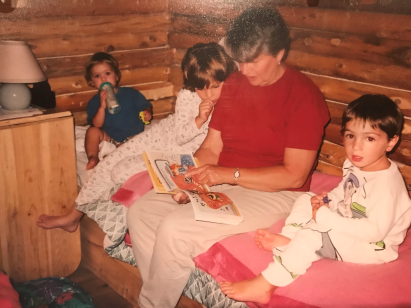
Around 2007, my father-in-law Claus was under the gun to squeeze even more grandkids into the little log cabin he had completed in 1998.

Claus and Ann were lifelong learners, enjoying courses at Haliburton’s School for the Arts in summer. Ann honed her pottery and art skills, while Claus learned about the fine art of woodworking — including a course specializing in the use of the router. 

Another course that caught Claus’s eye was memoir writing. During that one-week course, he told stories about his childhood in Manitoba, school days, his volunteer work in Africa — and about the little problem he was having fitting all the grandkids into the log cabin. 

The title and story are his original; I have added a few subheads and photos. I would add an editor’s note: I recall Claus joking that there was sometimes an excess of emotion when his memoir-writing classmates read their stories — tissues had to be close at hand.  Claus, by comparison, shared stories of his life and family with his own sense of humour, and carefully crafted details, without shedding a tear. The emotion — his love of family and pride in his craft — was implicit.

Here is the story he titled: “Cramming them in…” 

First five kids.png

By Claus Wirsig:

While large and rambling, our log cottage has only two bedrooms and a bunkie. Though a huge living room also lends itself well to accommodation of a pullout double or twin bed in one corer, the growing family size signalled trouble ahead.

All four of our daughters, scattered across the continent, wanted to gather at the cottage for their annual get-togethers. There were also friends to accommodate and the two oldest, Denise and Nadine, were married and already had three children between them. The first grandchildren were aged four and two in the summer of 1996. They liked to romp in the woods, play house, of course, swim when possible, and so on. Their mother, Nadine, suggested what they would really enjoy was a playhouse in the bush they could call their own.

Scouring the hills for cedar

Someone guessed they might even want to sleep in such a house. An idea started to take shape in my mind. Wouldn’t it be nice to build a small cedar log structure with a proper roof, door and real windows? I spend the summer scouring the Haliburton hills and found old, very old, Harvey Macintosh with a fence-post cutting business and a small sawmill operation. Perfect. A descendent of Macintosh apple creator, he had stacks of eight-foot cedar posts and 12-foot brace rails. I picked out about 80 posts of the rather small size I needed and a dozen brace rails of similar diameter.

Peeled, sawn on two sides to a uniform thickness of three and one-half inches, another long story, and dried over the winter, they were ready for my construction project to begin the next spring. In the meantime, I had built a solid full one-inch cedar floor in my garage workshop. It was the exact size, nine feet by 11, to fit within the hundred square feet exemption cut-off for a building permit in the county. The floor boards were solidly mounted on four pressure treated four-by-fours.  I also prepared a site behind the cedars quite close to the cottage and hauled in a solid crushed gravel base. That was year one.

Claus with joinery

The logs fall into place

First thing in spring of 1997, after gardening was properly underway, we hauled the floor to the building site. Then, one by one, the logs were put in place with spaces for the door and four windows, all of which were installed as the building went up. The door I constructed of solid cedar planking. The windows were recycled from an old fruit packing shed in B.C. which my dad had demolished many years earlier and I was able to have transported to Toronto. The three grandchildren, all girls, were delighted to climb over the construction site with growing anticipation of the time they had a real house of their own.

claus on ladder.png

To finish off I designed gable ends that looked like logs set vertically and an asphalt shingle clad roof, all specially designed to be air tight and animal proof. One son-in-law, Ian, helped with shingling the roof. Another, Frank, installed the electric service on an underground line from the switch box in the main cottage that Ann had helped me bury under our front lawn. All was in readiness for the interior finishing — but next year.

Design dreams in the wee hours

The workshop was humming in May and June of 1997. During the winter, I had worked out the designs in my head for four sleeping bunks and other fixtures that would be needed. These design sessions usually came upon me in the middle of the night and robbed me of many hours of sleep, just as they had done the previous winter when I had worked out the plans for the bunkie itself. In my mind, I always thought of it as a bunkie. When it was finished, the kids quickly baptised it “The Kids’ Kabin” with two K’s.

With three grandchildren underfoot and a fourth underway, clearly the least number of sleeping bunks required was four. So, the design provided one set of upper and lower bunks on each side of the cabin. All were attached to the wall with hinges so they could be tucked out of the way against the wall when not needed. The ground floor bunks each hid a large roll-out drawer and had additional space on the floor for other storage including a ladder needed to get to the top bunks.

Windows front and back had hinges and screens for fresh, cooling night air. The window on the side facing the cottage gives a good view of the cottage past the cedar tree trunks. Against the blank wall at the foot of the bunks, I built a corner bench along two sides stretching from the end of the bunks around to the small closet in the opposite corner where the door opens in a tight spot between the closet and the bunks on the other side. I made a bookshelf high over the bench and window at the open wall. The drawers are rarely used and the main function of the closet has been to house the potty that is so handy for the younger children.

“Their eyes sparkled…”

The best inspiration I got in my nocturnal mental wanderings was the construction of a collapsible table between the two sets of bunks, reminiscent of dining tables seen typically in travel trailers. Hinged about 12 inches from the wall, when the single but sturdy supporting leg is clapped inward, the table provides a marvellous card or other game playing space between the bunks and is readily collapsed into a small night stand. Four covered foam mattresses, each 30 inches wide and 72 inches long, and voila! The Kids’ Kabin was ready for business.

The two oldest grandchildren, Alison and Colleen, arrived on Friday evening of the July 1st long weekend. Their eyes sparkled as they came down the lane and I opened the door to the building I had finished not 10 minutes before. They could hardly wait for bedtime. After some excited chatter which we followed on the  baby monitor beamed to the cottage, at the age of only five and three, the girls slept right through to morning. They have only rarely spent a cottage night anywhere else since.

three girls.png

The grandkids keep coming!

Two weeks later, their cousin Anna from New York arrived. And so did Chantal, the daughter of Karen’s partner, Stefan. All four bunks were filled each night!

By the spring of 1999, trouble arrived in the shape of newest grandson, Paul. Where were we to put him? The four bunks were occupied. With some reluctance, I converted the nice bench at the end wall to a bed with a 24 by 60 inch foam mattress. It worked like a charm. This was Paul’s special bed.

Ann and kids.png

But life and laws of fertility being what they are, the next year brought another body to the house in the Kids’ Kabin in the form of Rachel. What to do? I designed a slat frame similar to the bunk beds that could be fit between the two lower bunks. Rachel was delighted to be able to sleep between two big cousins. Problem solved. Six kids housed in a four-bunk cabin.

Colleen and Rachel.png

A few years later, yet another challenge arrived in the firm of Karen and Stefan’s new son, Felix. Suggestions anyone?

Claus and Felix.png

kids on dock.png

Epilogue

Now let’s hear from more of the grandkids…

Rachel, now an engineering student, recalls:

“The cabin had an assortment of blankets — the tiger, the red plaid etc. — and Paul and I would call dibs on the best ones.  There was always a rotation of Archie comics that travelled between the cabin and the cottage, and I would hunt down the ones that I hadn’t read yet (that summer) all over the property and bring them back to the cabin.”

“It was always the most fun when the cabin was full of cousins; I would stay up late to listen to all of the gossip.”

Felix, the youngest, and now the tallest, writes:

The first memory I have of the cottage is the cabin and the sand box outside of it. I was the youngest of the kids so I slept on the small bench at the edge of the cabin.
I remember having a lot of fun as a young boy. I would sleep with my older sister and my five cousins in a confined space. The cabin reminds me of summer and of nature. I spent a lot of my summer at the cottage in which I slept in the cabin. We swam, went on boat rides, did treasure hunts, had marshmallow fires, played cards and name games and had many fun and memorable moments at the cottage.
I was always amazed that the cabin was built by Claus (grandpa). I remember waiting for the other kids to have pancakes, porridge or eggs and bacon. We would have great conversations late at night. 
I was so sad when we could no longer go to the cottage. A big part of my childhood was spent at the cottage and in the cabin so I was glad we could keep a big piece of the cottage. Nadine and Ian’s cottage is very close to the old one. When the old cottage got sold, Ian and Nadine decided to move the cabin to their cottage. Although we cannot go to the old cottage, we can still go to the cabin. 


Stone terrace twilight

Our bluebird family had flown the coop for warmer climes and the Canada Geese were flying circular training runs in the farm field next to our cottage. Honking in their traditional V-formation, and weaving expertly through a set of hydro lines, they prepared for the journey south.

canada geese
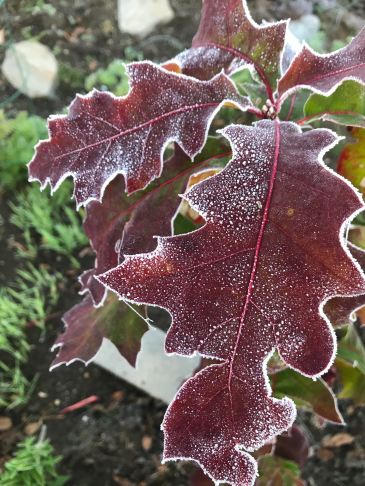
oak with frost

First frost shimmered on fall colours in Minden Hills, lighting up the leaves of the baby pin oak tree next to our garden.

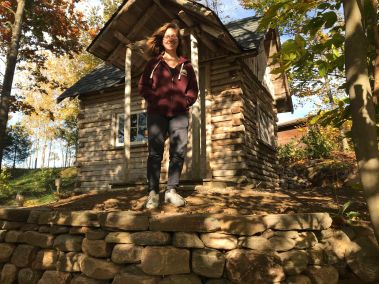
Several tons of stone and a special order of granite that I had obtained from Brent Coltman and his father Wayne had been formed into new dry-stone terraces surrounding the little cabin in the forest.

The cabin, originally built by my father in law, Claus, and later moved to our place by truck and crane, now had some breathing room in front and back. It would stay higher and drier in the long winter, and it sported a new extended front porch area for future occupants.

For my stone work this year, I had channeled learnings from master stone waller John Shaw Rimmington and my classmates at Haliburton School of the Arts.  Working with sometimes gnarly and ancient stone once rolled by glaciers, I had come to appreciate its beauty and history. And yes, as I got into a rhythm, putting the pieces of the dry stone puzzle together, I occasionally dreamt of stone.

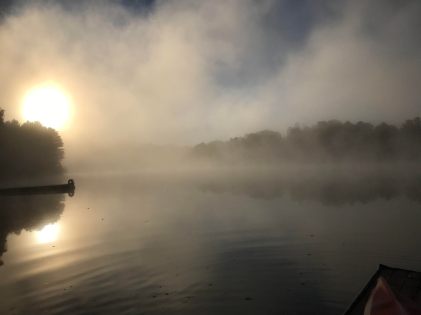
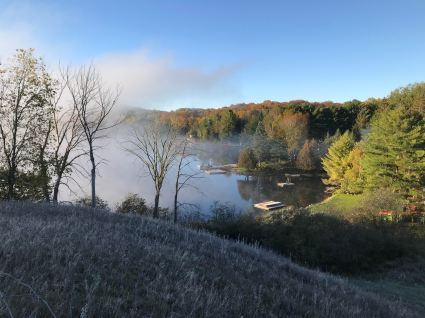
The morning frost sent a mist off the lake and up the hill.

misty lake

fall lake view

Around the cabin site, new perennial hosta plantings blended with a grove of smooth-barked beech. Annual impatiens flashed their final colours of white and pink. Sturdy oak trees continued to rain down their motherlode of acorns for local critters.

By the lake, our stone terrace gardening efforts had yielded some new perennial plants that were now established and should survive the winter. Nadine’s gladiolas and hydrangeas continued to produce beautiful blooms for table arrangements. Annual orange nasturtiums cascaded and collapsed over the stone, touched by frost. The fig trees I had put out in pots for an Italian garden touch would need to be brought inside soon to hibernate during the long Canadian winter.

We were missing our two daughters Ali and Colleen, who were living and working far from home — in Scotland and the U.S..  For this Canadian Thanksgiving, we were joined in Minden by four young adults — two of our nieces, Rachel and Katie, and two family friends, Mehtab and Alva — and Nadine’s mom Ann. They checked out the log cabin in its new stone nest in the forest.
rachel at cabin

On tap that weekend were some board games, a tour of local artists, and some homework for the youth movement — they were studying engineering, political science, commerce and social work respectively. The highlight was a splendid turkey dinner prepared by Nadine and Ann.

Next to a roaring fire outside, we roasted marshmallows, then coaxed embers around a big beech stump that was slow to burn. Night fell and stars came out across Minden Lake. As the air chilled, we fed the fire and nudged our chairs closer to its warmth.


Haliburton stone — so Gneiss!

As the terraces came into shape, I learned more about the stone I was working with.

“Your geology in Minden and Haliburton is quite different than ours,” explained Nadine’s cousin Jay, who lives with his family in Kingston, Ontario:

“Your stones are well-rounded because they were tumbled in the glacier melt, thousands of years ago. They were left to be found in the sand-glacial till mix.”

Gneiss in hand.png

Stone farmers

Farmers here know this, as they have been plowing up rocks with rounded edges of all shapes and sizes, and leaving them in rough fencerows, for more than a hundred and fifty years in the Minden area. In fact, I had pilfered quite a few of these beauties from an old farm field boundary behind Nadine’s parents’ cottage on Horseshoe Lake years ago.

As the stones often have a rounded look to them, sometimes they are referred to as “river rock.” Fortunately, many of these tumbled stones do lend themselves to dry stone walling, as they may have at least one set of parallel edges.

Different parts of the country each tell their own stone stories. In contrast to the Minden/Haliburton area, the stone near Jay’s home in Kingston “is still being calved by the freeze/thaw cycle from the original rock,” he noted.

Metamorphosis

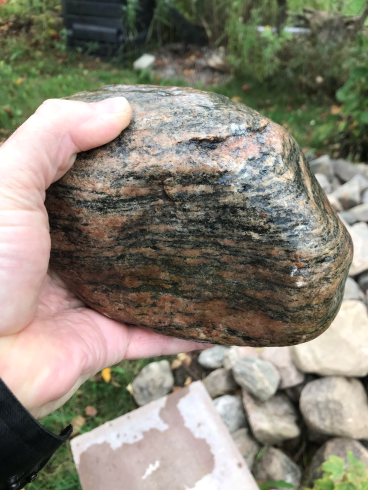
My friend Rob had seen the big pile of stone on our front lawn, delivered that spring by local aggregates supplier Brent Coltman. Rob had a closer look and identified the stone as mostly Gneiss (pronounced “nice”).

It’s a metamorphic rock — meaning it has been transformed under high pressure and temperatures. And it was rolled along on journeys propelled by the glaciers that once covered Ontario.

Not only is Gneiss nicely-rounded, but it has a banded, layered texture and splits fairly well.  In a few cases where I needed to remove imperfections from a stone, I was able to find the seam of the stone and split off the bad bits with a hammer and stone chisel, and some patience. With a little more skill and practice, I could split more stone where needed to get flat edges.

“You can actually split it like firewood,” said Brent, who had dropped five tons of stone next to our cottage earlier that spring.

So the new terrace walls rising around the log cabin at our cottage were mostly made of Gneiss.  And the thicker, heavier capstones I had obtained to top off the walls were from granite seams of rock that had been untouched by glaciers.

An ancient fault-line

Feeding my addiction to dry stone walling, my mother-in-law Ann gave me a book telling the fascinating backstory of stone in Ontario.

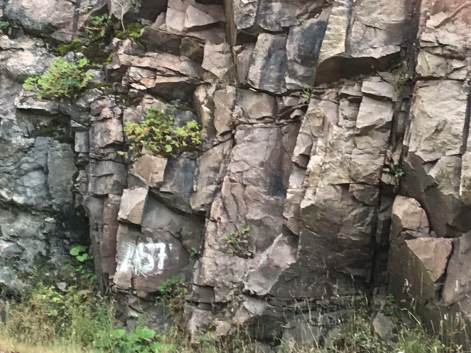
I learned about a giant fault line that bisects the tiny town of Miner’s Bay, just a short drive south of our cottage on Highway 35.

Miners Bay rock cut 1.png

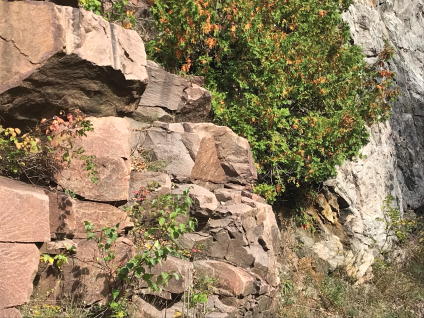
Nick Eyles, author of Road Rocks Ontario, describes the clash of two major divisions of the Canadian Shield, seen in the road cut on the highway there.  One is the Central Gneiss Belt. The second is the Central Medisedimentary Belt. The contact between these two belts comprises rocks “that were stretched like warm toffee at temperatures up to 800C at a depth of up to 25 kilometres,” Eyles noted. Some Canadian Shield stone in Ontario is more than a billion years old.

The site at Miner’s Bay, which houses a popular old-style lodge between two lakes, “shows a superb outcrop of highly deformed marble.” This is made up of Gneiss and Granite — some of it marbleized and some busted up from tectonic activity. The tiny town also has a pretty church, its walls showcasing the beauty and diversity of local stone.

Miners Bay Church.png


Eyles hypothesizes about earthquake potential in this area: “It’s an inexact science but (this fault line) may be capable of creating a magnitude 7 earthquake every couple of thousand years.  The trouble is we don’t know when the last one was.”

Batten down the hatches!

Learning more about the stone from friends, family, and experts, made me appreciate the material I had been working with that summer to build terraces — its history, composition, and the beauty of its pink and grey layers.

So Gneiss!!

Miners Bay rock cut 2.png

Building with B-grade stone

The log cabin needed some breathing room behind it, to the east, where it nestled into a fairly steep hill.  A little terrace there would keep it high and dry in winter, and allow a walk-about around the exterior.

But I had used up the best stone on the first terrace. It now propped up the cabin’s entrance area. I would have to dig deep for more stone.

Many years ago, when our young family had moved into our home on Fulton Avenue in Toronto, the contractor had recommended “tavern-grade” oak for a reno on the main floor. “The B-grade stuff is half the price but actually looks nicer with the variations in grain and colour,” he had told us. Sold!

So my task now was to build a pretty and functional retaining wall out of the remaining B-grade stone. This one would be a book-end to the first terrace, with a straight stretch tracking parallel to the cabin wall, and a freelance curve ending next to a tree.

Working with gravity and gnarly stone

I got the area excavated with a spade, and put down some gravel.  With my old wheelbarrow and the benefit of gravity, I trucked the stone downhill to the job site.

The stone was local Gneiss, which had been washed by glaciers here thousands of years ago. The B-grade stone was gnarly, generally less straight than the first batch I had picked, and with rougher edges that sometimes needed to be knocked off with a chisel.  Its colours were motley, ranging from pink to dark blue-grey. But as I got the stone sorted, and a straight and level line put in as my guide, the wall started to come together.

gang by rapids.png

Cross-cultural fun

Our younger daughter Colleen had arrived, with her boyfriend Tim, and his family from France. Tim and Colleen stayed in the log cabin, getting a nice view of the lake each morning through the trees. The two families enjoyed some cross-cultural fine dining, both with home-cooked meals and at some nearby eateries.

We also took advantage of a great stretch of weather to swim, canoe and kayak in Minden Lake, and walk to nearby rapids. One day, the gang swam about an hour down the Gull River — an annual tradition known as “floating your hull down the Gull.” We treated ourselves to some Kawartha Dairy ice cream as a reward — gazing at dozens of flavours and their mouth-watering descriptions as we stood in line outside the dairy. Muskoka Mocha, Death by Chocolate, Moose Tracks — there were way too many choices.

Flexing to the flora

The following week, I kept at the stone-walling, building up the second terrace course by course, and packing it with heart-stones. The wall behind the cabin was interrupted by two conjoined trees and their large root-ball — I walled around it rather than remove the trees and roots.  They gave the cabin some privacy from the neighbor to the east.

impatiens on beech stumps.png

A big old Beech tree had been taken down nearby due to disease, and Nadine suggested some flower pots to go on the tree stumps. We kept it simple, with colourful and shade-tolerant impatiens — by mid-summer they had come into their prime.

I still had some nice heavy capstones left to crown stone terrace number two.  The little terrace curved to end at the foot of a young maple tree, which was growing fast. It would add to the forest colour around the cabin, especially in fall.

From B-grade stone had come a cute and functional little A-grade terrace!

east retaining wall.png