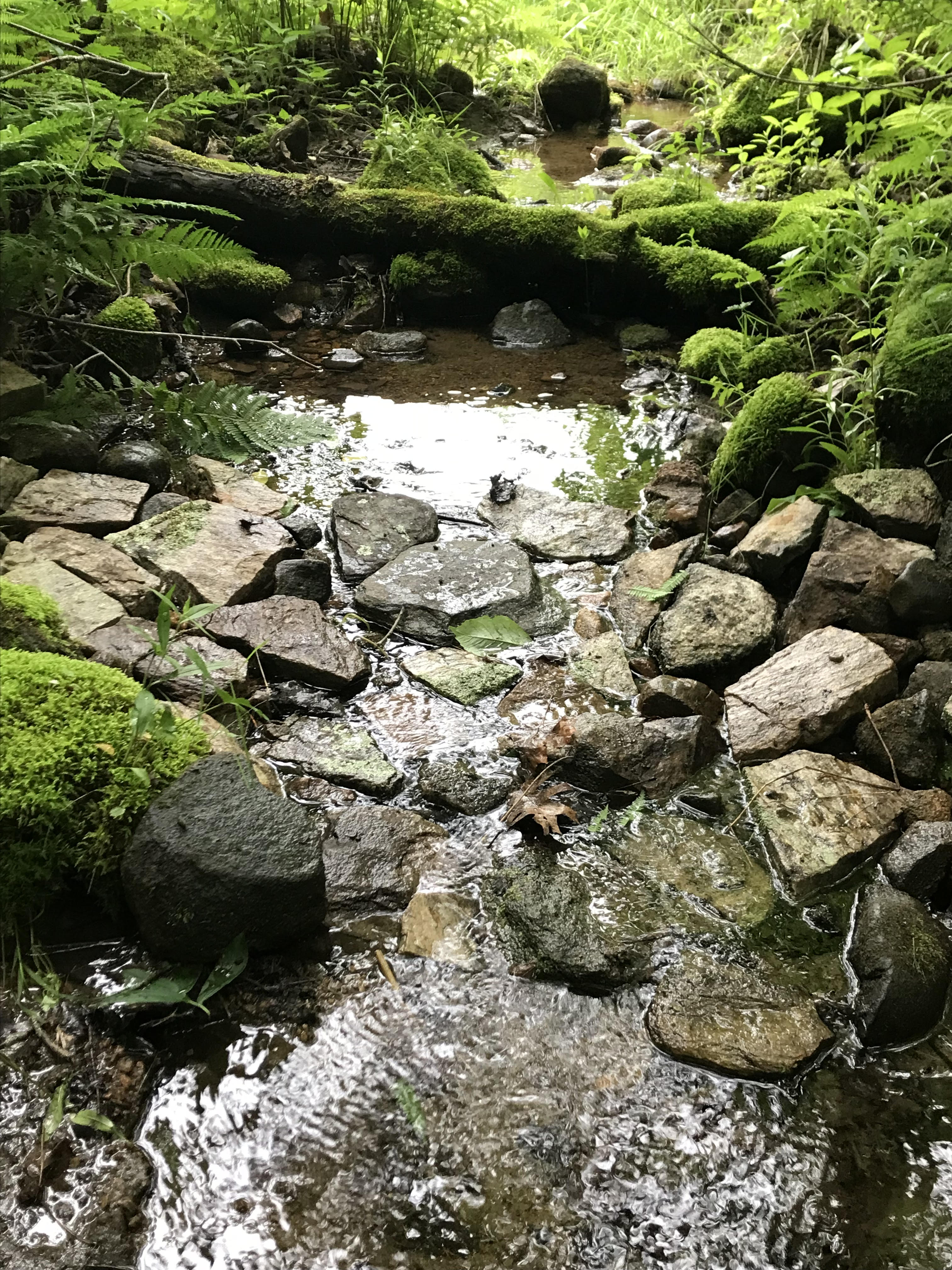
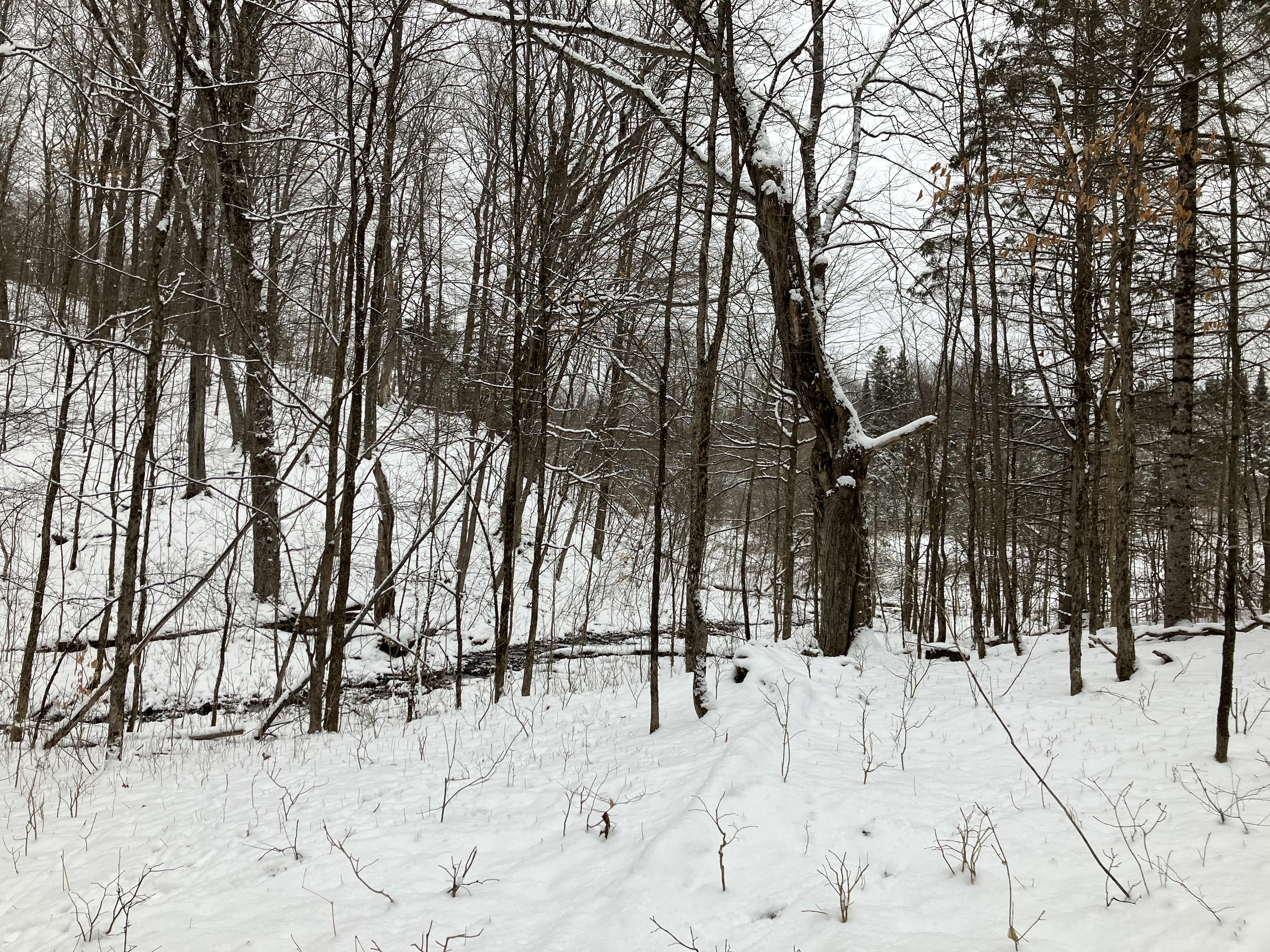
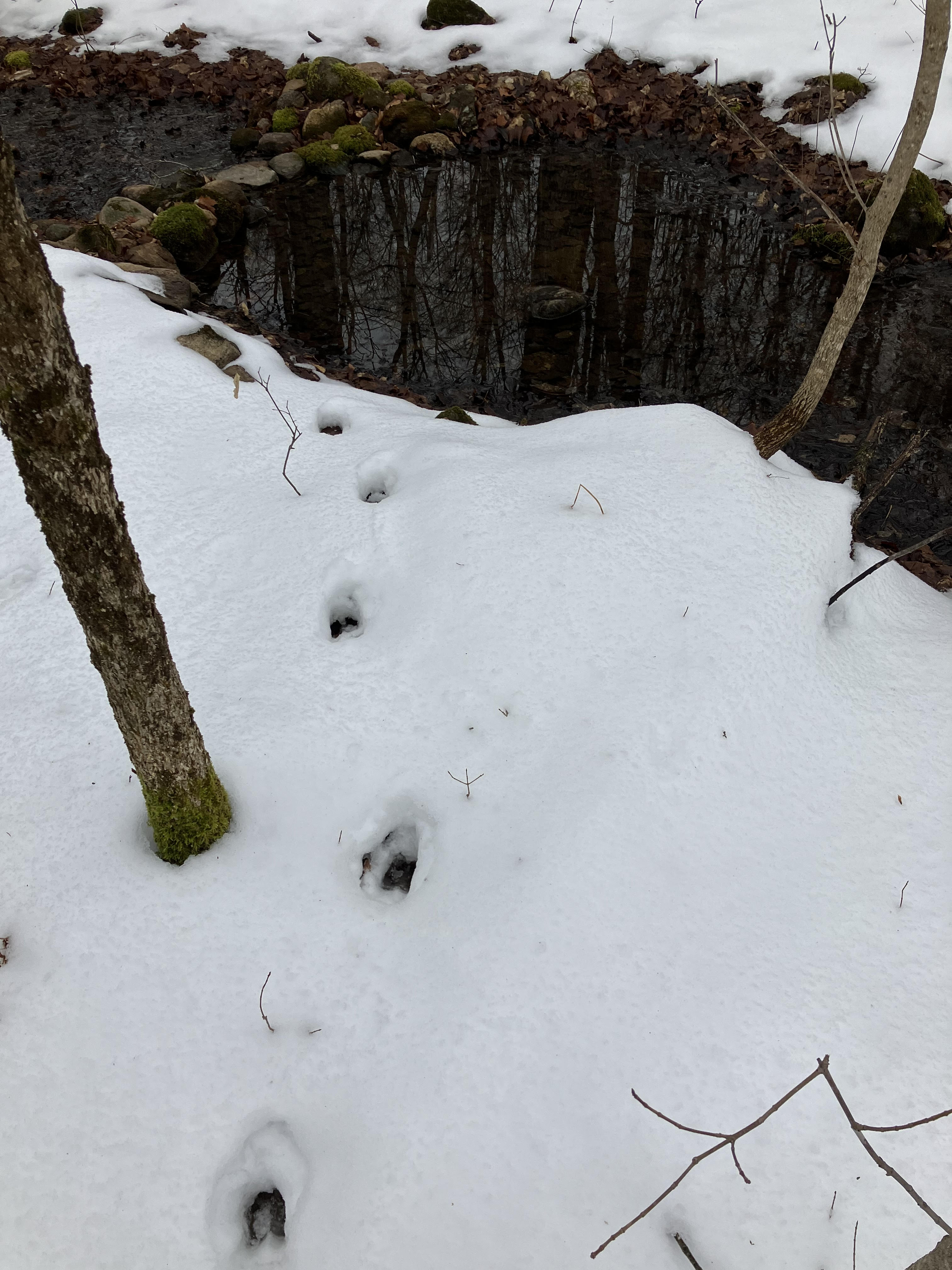
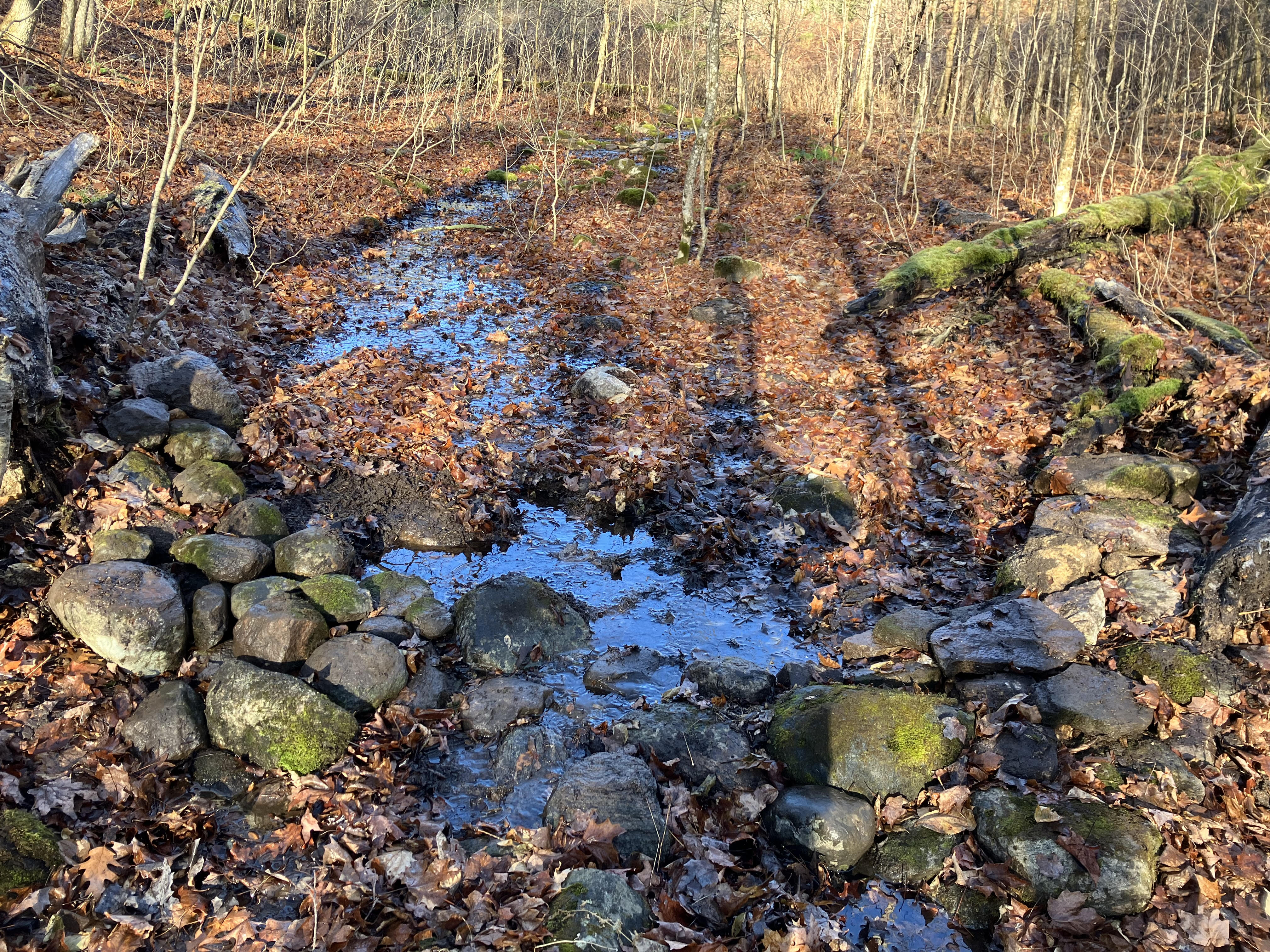
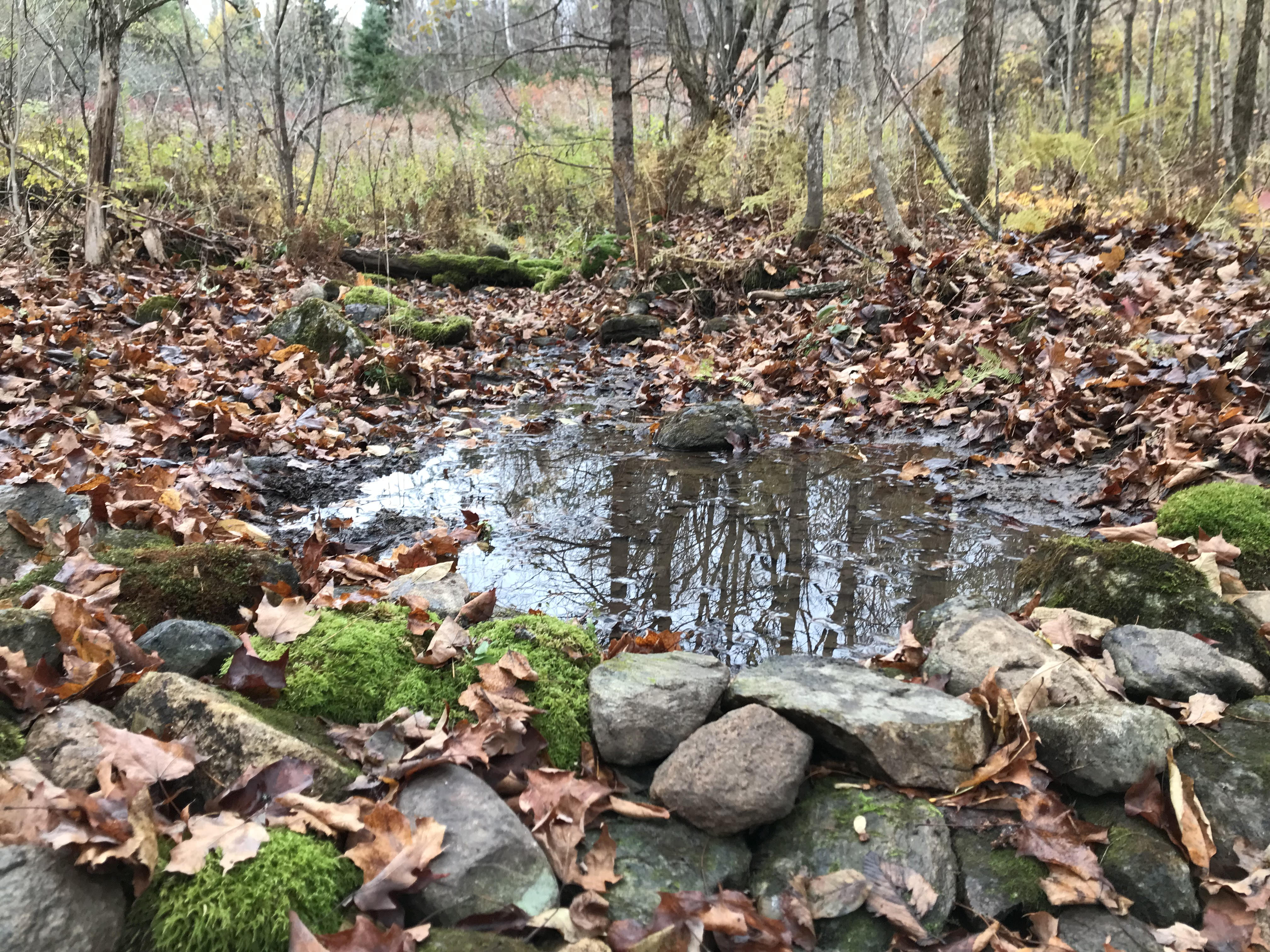
Back in the bush, a tiny creek cascades into a small pond. The water’s surface reflects stark shadows of nearby hardwoods. The forest is mostly bare, but green conifers stand out against the white snow cover.
Artist Jacqueline Halupka interpreted this magic moment at Kinross Creek in a painting, using acrylic on canvas. After a career in information management, Jacquie has experienced an artistic homecoming in retirement – picking up her brush and paints to interpret landscapes in the Haliburton area.
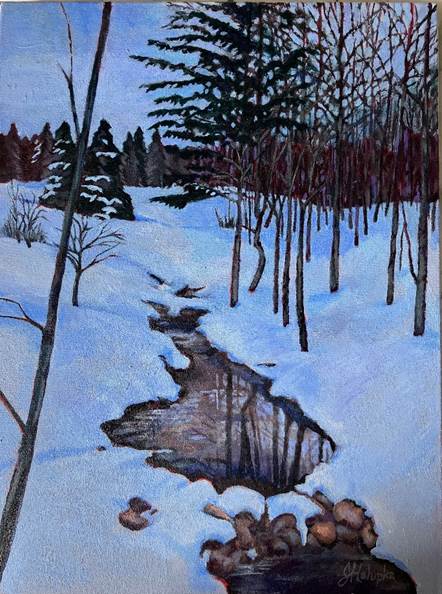
Kinross Creek
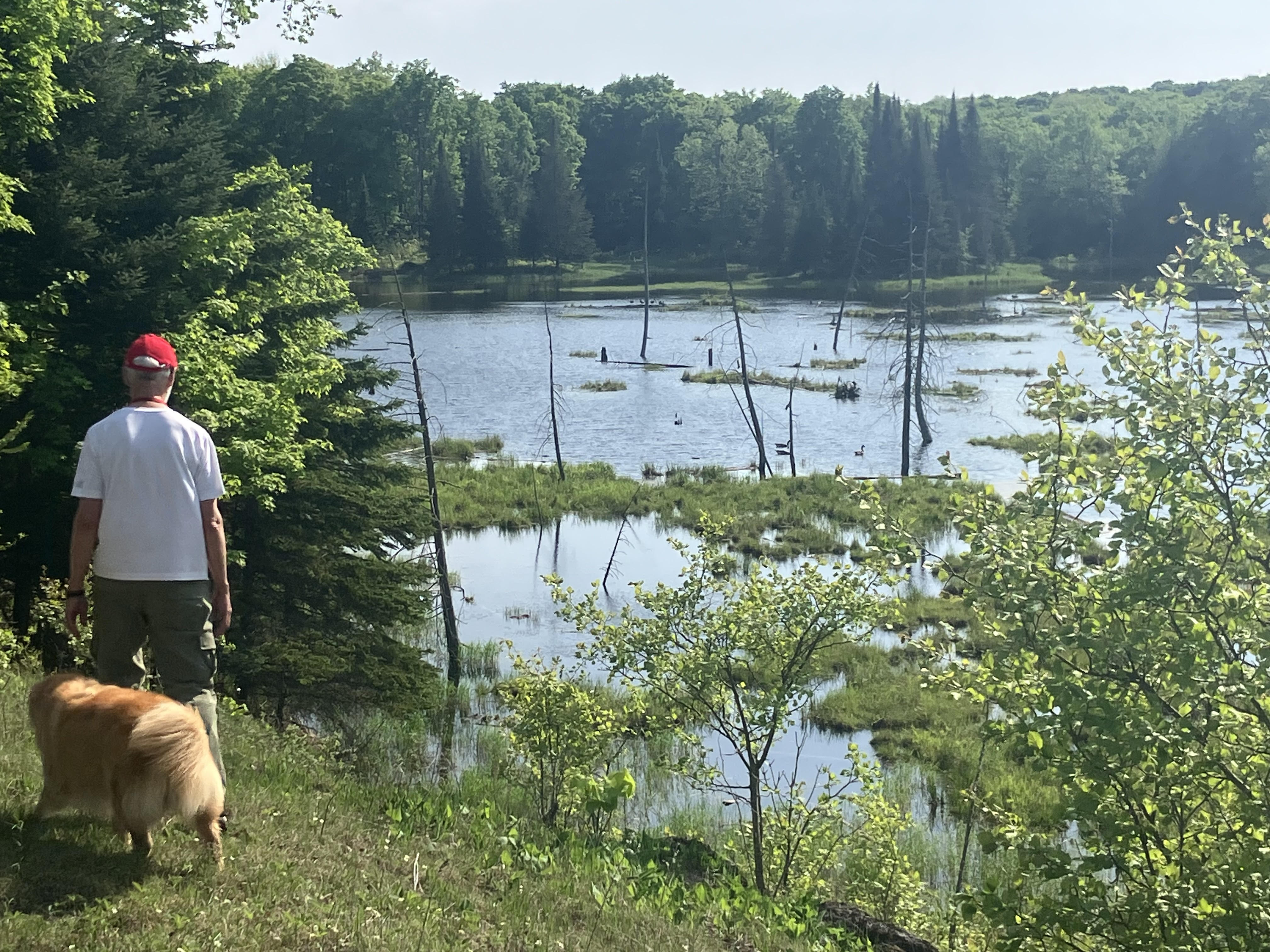
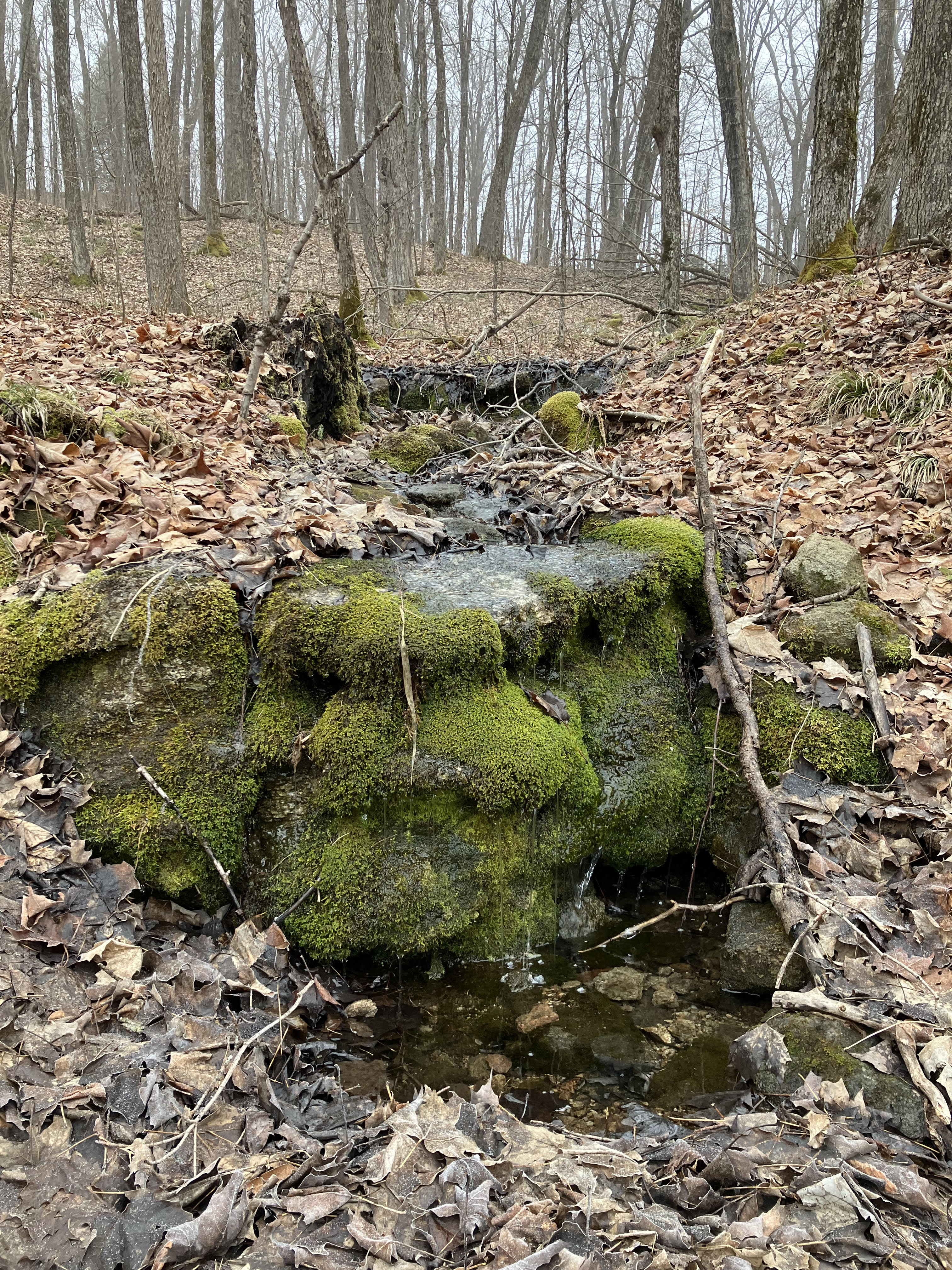
Jacquie, her husband Rob, and their faithful hound Mungo, joined me for a trek to Kinross Creek last year. It’s a peaceful spot in the forest, about a 45-minute trek from our cottage on Minden Lake.
I sat down with Jacquie recently to find out more about her artistic style, process and inspirations.
What is your favourite season for painting landscapes?
I have been fixed on winter lately. The colours are muted, but there are lots of them: whites, blues, the green of conifers, purple tinges in the forest, changing colours in the sky.
In early winter, you see diverse colours in berries, grasses, leaves. After the snow falls, there are variations in tree trunk colours that jump out at you against a stark white backdrop. Depending on the light, these colours change — and make it endlessly interesting to render in a painting.
While fall colours are glorious, winter colours are hidden gems.
What is your process for painting a landscape?
I’m not typically a plein-air painter, working outside. My method is to take a lot of photos outdoors. If I’m hiking or driving and see a scene that catches my interest, I’ll stop and photograph it. Then I’ll sort through the photos and find the composition I like and think: “That’s the one!”
Then I paint the scene in my studio. I work in both oil and acrylic paints on canvas, wood boards or paper.
Besides landscapes, I enjoy painting vignettes of people and animals. Each painting, no matter what the subject, presents some challenges, problems to be solved and decisions. For example, for the sake of the composition, I might focus on certain elements and edit out others. Unlike other things in life, you can actually paint over a difficult image.
How do you balance realism and artistic impression?
My landscapes are representational. I don’t paint realism, but I do focus on what I see, and I want the scene to make sense.
For example, I might make edits to define how the trees meet the sky, or the number of elements in the background of a scene. I want to make the scene look right.
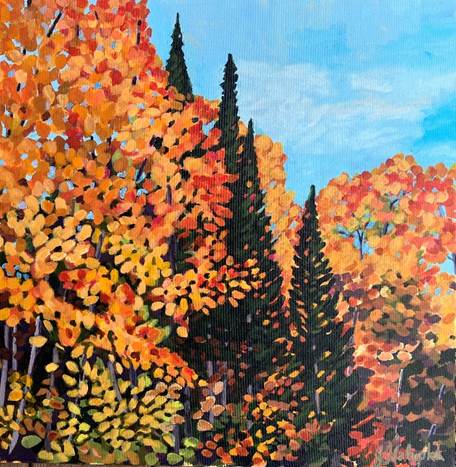
An autumn palette by Jacqueline Halupka
How did you approach the Kinross Creek scene?
What was fun was seeing the patterns and colours of the reflections in the little pond. That became a focal point of the painting.
The surface of the water has a brownish base but when you look closer, there are reflections that incorporate blue, pink and purple. Plus, you have the reflections of the tree branches criss-crossing the water’s surface. The stones have subtle colours and textures.
Where did you get your start in art?
I grew up being the artistic one in our family and had romantic notions of becoming an artist. I studied visual art at York University and might have considered an art college like OCAD, but reality hit – I had to make a living. I obtained a Master’s degree in Library Science and pursued a career in business research and information management. We were also busy raising our family.
Did you keep your hand in painting during your career?
Only for small things like Christmas cards, and only for a few years. My art took a back seat for 25 to 30 years, but I still felt it was part of my identity. In 2013, a friend of mine, Julie Mathews, was taking a mosaics course and, when I joined her there, I got interested in that form, including both glass tiles and stained-glass mosaics.
When I retired in 2016, I took a course in botanical drawing at the Haliburton School for the Arts. I really enjoyed it and realized I had not forgotten how to paint. I then took a course in landscape painting at the Haliburton School for the Arts and started regaining confidence in my abilities.
Where can people see your art?
In Haliburton, my work’s been exhibited at the Rail’s End Gallery and Art Centre, and I’m a member of the Haliburton Arts Council. I am continually inspired by the artistic community in Haliburton. The settings in Haliburton, with its lakes, forests, rocks and plants, are glorious and also inspiring to me.
In Toronto I exhibit regularly at the Don Valley Art Club shows and I also had a solo show for my mosaics.
Which artists inspire you?
My favourite local artist is Susan Hay; I love her colours, shapes and use of light. And of course I am inspired by the Group of Seven, especially A.J. Casson.
One of my favourite Canadian painters is Clarence Gagnon, who used colour and light in many seasons to capture rural life in Quebec in the 1800s.
How do you see your art evolving?
I want to do more plein-air (onsite) painting to learn how to paint faster to capture scenes in real time. On the technical side, I like to try new techniques such as building a textured surface that takes the paint in a different way. Also to use more oil paints, which handle differently on the brush than acrylics and deliver a different effect on canvas.
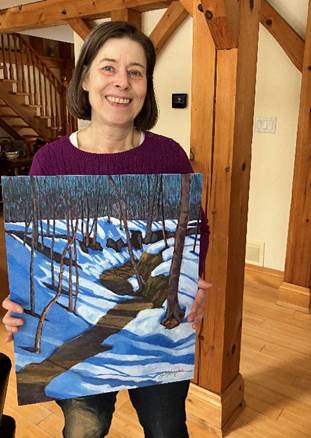
Jacquie with a winter scene she completed in 2025
Special thanks to Jacquie for her interpretation of Kinross Creek. For more information about her art, please visit Jacquie’s website at: halupkaart.com or jhalupka on Instagram.
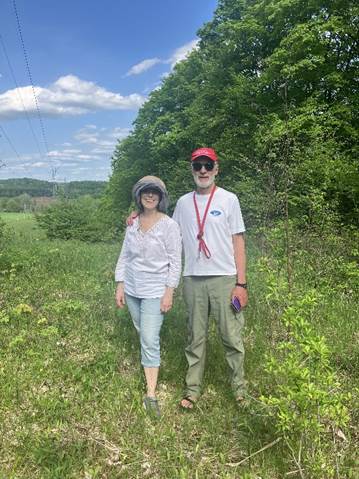
Jacquie and Rob near Kinross Creek in spring 2024.














 kinrosscordless