Messing about with stone at Kinross Creek

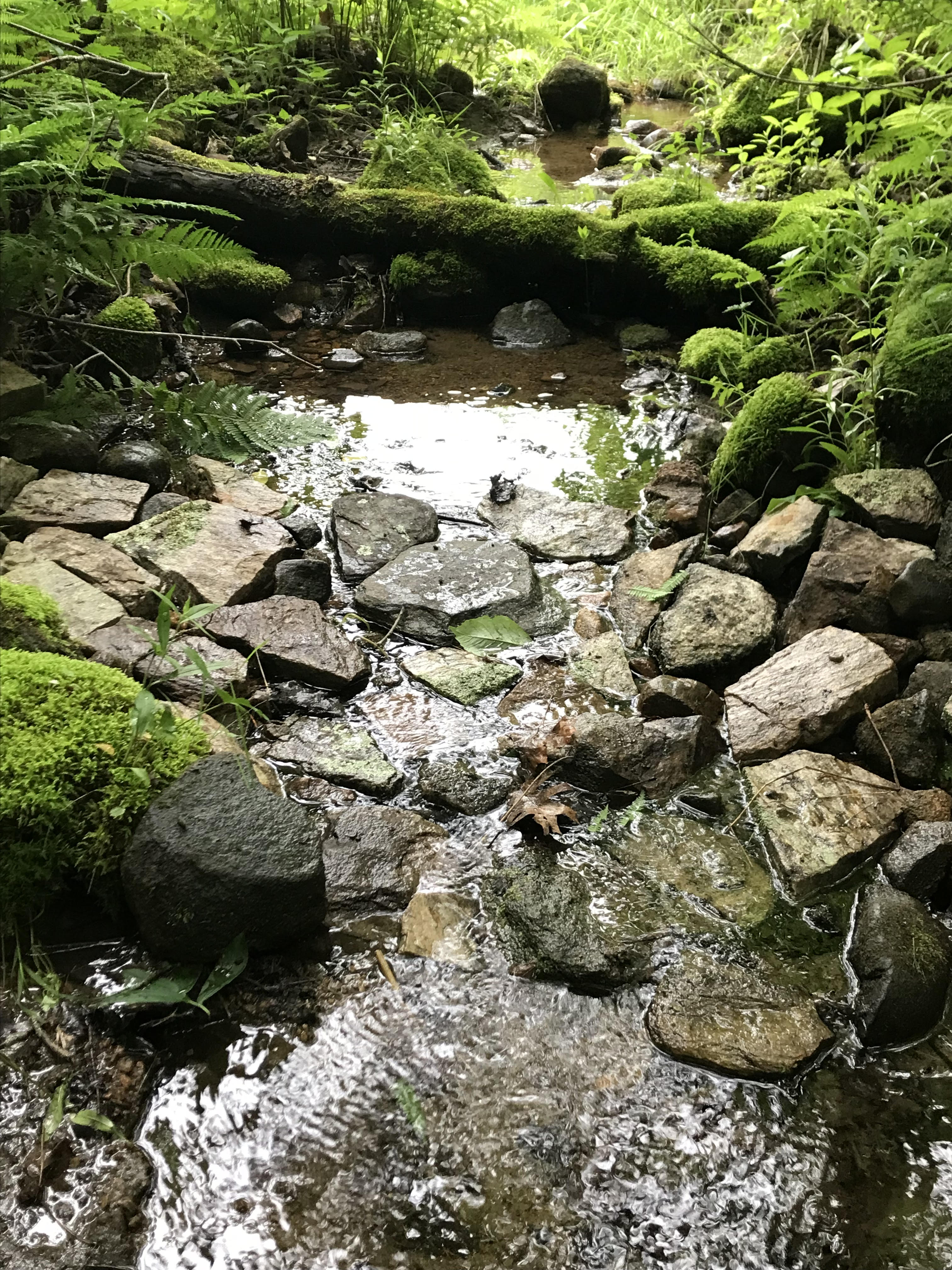
To my surprise, Kinross Creek is still burbling on a visit in late June, 2023. I had suspected that this little creek, which carried away the spring run-off from a melting snowpack, would be dry by now. On the other hand, we’ve had a few periods of heavy rain lately.

The creek drains a mostly forested watershed north of Minden, Ontario, next to a hydro corridor and abandoned farm. It’s a green and peaceful place.

My goal today is to build a little “check dam” using about 50 stones I gathered on previous visits to the creek. These stone features are used particularly in arid climates to “check” or delay the flow of water in a creek or river.

Arid areas in places like India or Arizona sometimes get heavy rains, so a series of check dams can preserve some of the water before it runs off. The word “dam” is somewhat misleading, as these features delay water flow but do not stop it entirely like some dams.

Minden is not an arid place, although we’ve had spells of drought in summer. But I like messing about with stones. So thought I would try building a few check dams on my favourite little creek back in the bush.

Kinross Creek already features some small ponds created by deadfalls of trees, so my plan is to enhance those pond features by adding some local stone. There’s no shortage of stone in these parts: the first farmers spent a lot of time clearing stone and placing it in piles and rows so they could grow crops and pasture cattle.

Building a tiny dam — check!

One design I came across is called the “one-rock dam.” Another misleading title. The dam is in fact one-rock high, but built out of many rocks. And again, it’s not a dam, but more of a stone feature that checks the flow a bit as the water runs through it. The check dam also blends in with nature by following the contours of the existing creek bed.

The first step is to place a few slim, flat stones in the centre of the creek. These will act as a splash pad, as most of the flow will be directed over them. Then I use progressively thicker stones to build out the one-rock dam upriver and to the sides of the creek. Finally, I use small stones to fill gaps in the bigger stones. I’m following methods of some folks from different parts of the world who have shared their one-rock-dam methods on YouTube, often under the permaculture theme.

I find myself placing stones with one hand and swatting away mosquitoes with the other. Above, a big crow is commenting on my work with his rough cry.

A crow commentary

Last time I was here in May, the forest was filled with birdsong. Today, there is just one black American Crow, high in the trees. Is he mocking me? Perhaps all the songbirds I heard before are napping now, or were just stopping here before on their migration north.

The creek seems to appreciate my efforts. The water gathers and flows through the centre of the stone feature, dancing around the stones along the way.

My next goal is to build a slightly bigger version of this check dam just downstream. If I get it right, this will create a small pond, with an overflow.

There are many deer in these parts, especially in winter. When snow was still on the ground in April, I saw their countless trails crisscrossing in the woods. So given there are rarely humans here, perhaps the deer will appreciate my pond. Maybe they’ll stop here to have a cool drink.

I’ll be back next month. If the creek has dried up by then, all the better for building the next little check dam at Kinross Creek.

Wild leeks and birdsong

Kinross Creek, the little seasonal stream I found high up a hill north of Minden, is still running strong in Mid-May. I’m on a mission to pick up some wild leeks here for supper.

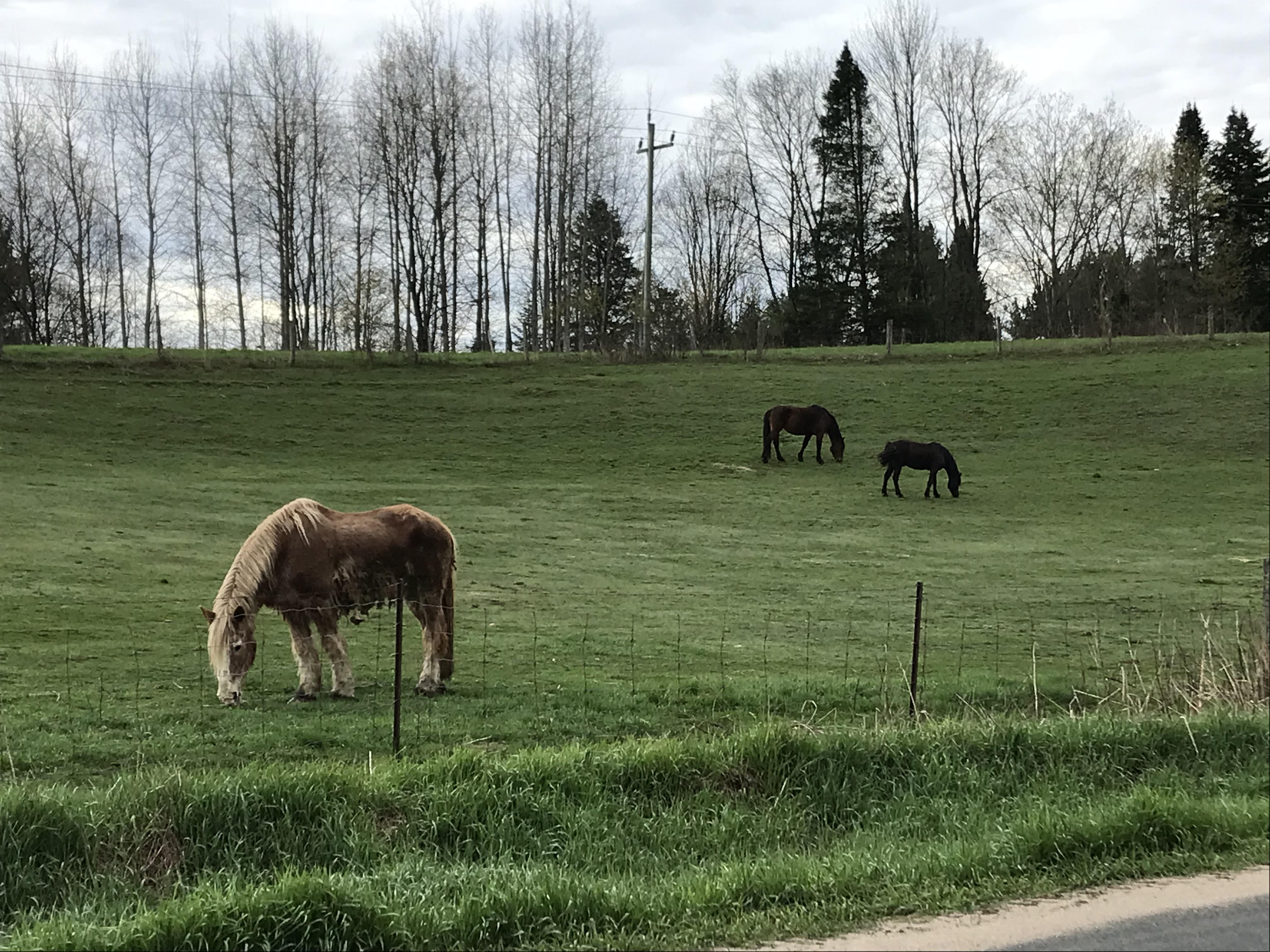
At the top of the hill on the hydro corridor, huffing and puffing from the short but steep hike, I ditch my fleece and jacket. The sun is out — it’s T-shirt weather. I pause and look back down at the green fields of a nearby farm. A blue tractor chugs in straight lines, spreading manure to enrich the crops. An old draft horse munches his way through the fresh shoots of grass. I will take a pic of him when I get back down.

The tall hardwood forests are filled with birdsong. Last time I was here, I recognized one or two calls, like the feisty screech of a red-winged blackbird. Today there is a richer chorus as many more birds have completed their spring migration north.

The birds are back

To fill in the gaps, I pull out my cell phone with its Merlin app. Cornell University created this app to identify birds by their song. Within 46 seconds, it picks up eight different species: the Great Crested Flycatcher, Ovenbird, Rose-breasted Grosbeak, Scarlet Tanager, American Redstart, and three different types of Warblers: Black-and-White, Nashville, and Chestnut-sided.

Amazing! I can’t see any of these birds, and recognize only one of the species identified, but they are with me, singing out in the forest canopy.

In the clearing along the hydro line, I do spot a lone turkey vulture, floating clockwise on a thermal, looking for his next meal. The feather tips at the end of his enormous wingspan look like fingers. I hope it’s not me he has in his sights.

I tramp down to the small valley that feeds the creek. My plan is to visit this creek throughout the year to track its lifecycle and the natural world around it.

Catching the sun

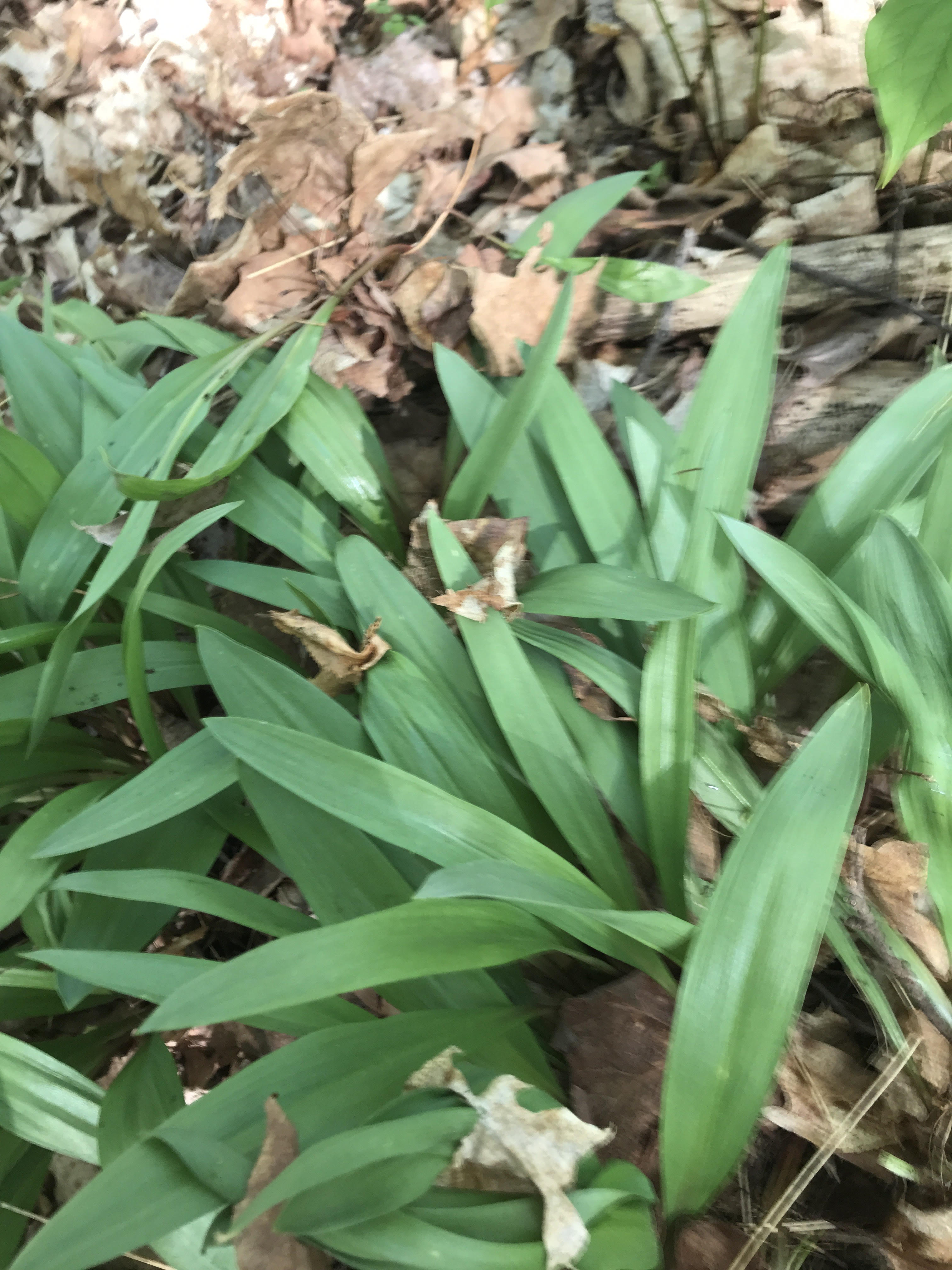
Today, my mission is simple. I’m after the tiny, tasty wild leeks of Minden Hills. Before the trees come into full leaf, these tiny greens spring up and catch the energy of the sun. In this area, they grow in clumps of hundreds. In some spots, they carpet the forest floor in the thousands.

After tracking downstream maybe 50 yards, I find the first clump of leeks, kneel down, and carefully dig up a few with a garden trowel. I knock off the dirt to see the purple and white stems below tender greens.

The entire plant is edible. These will go nicely fried with mushrooms, atop the mini-pizzas Nadine is planning for dinner. I put them and my garden trowel into a small bag.

A peaceful spot

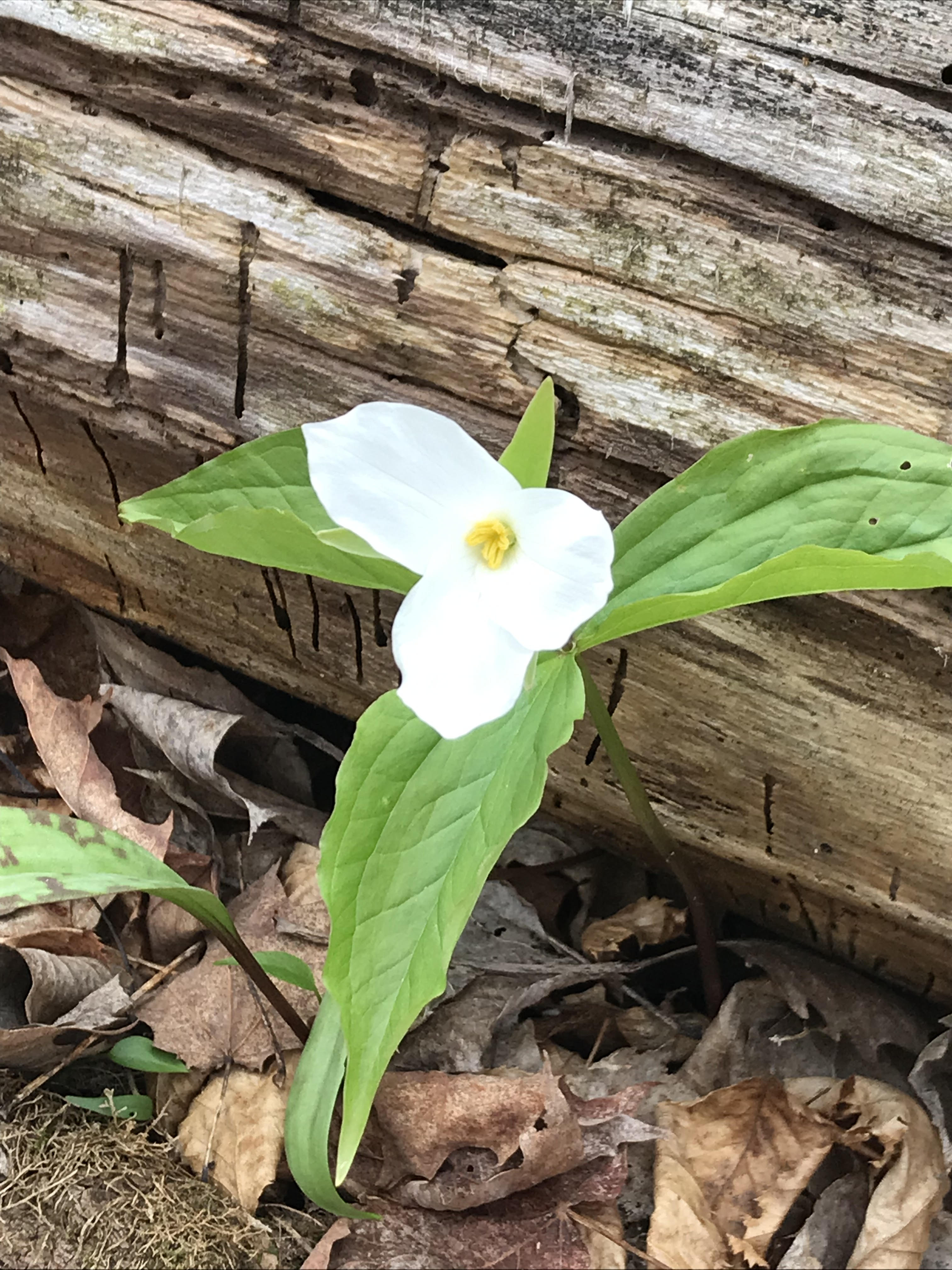
This is a peaceful spot with the little creek still burbling. I’ve been gathering a few stones to improve a small pond along the watercourse. The first trillium blooms against a fallen log.

But today I’ve noticed that blackfly season has begun. The little critters are going after my ears and neck.

Mission accomplished, I pick up my jacket and start the hike back down the hill, leeks in hand.

Guerrilla garden reconnaissance

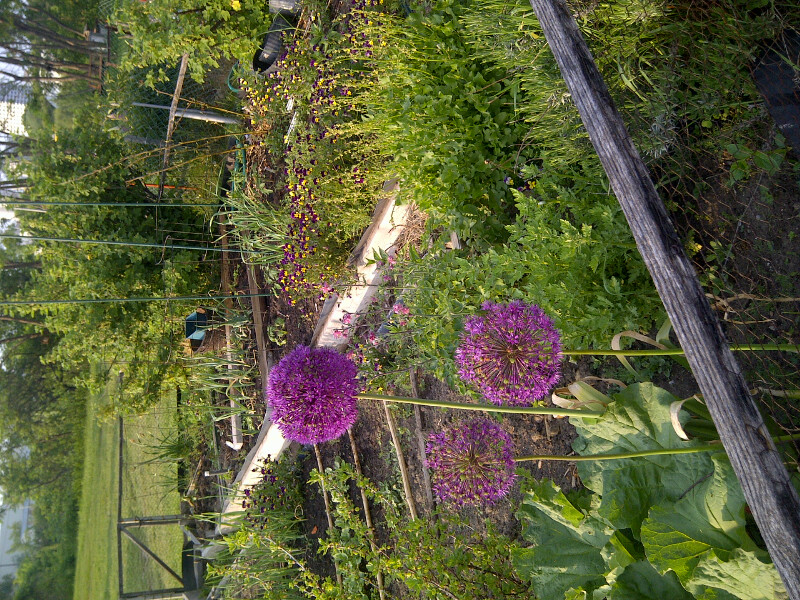
I’m on a mission. But this guerrilla is packing garden tools and geraniums, not weapons. It’s a mission of hope and peace, to beautify a city space after a long winter and grinding series of covid lockdowns. The city could use a little spring cleaning.

I’m returning to the scene of the crime — the gritty intersection of Pape and Cosburn Avenues in Toronto’s central-east end. It’s where my first guerrilla garden flourished a couple of years ago, aided by some good Samaritans who stopped by to water and tend the plants. The local crossing guard, Leo, told me then that people had admired the tiny garden and wondered “Who is this mystery guy with the flowers?”

Today, the garden’s former location is out of bounds — a new building is rising from the ashes of the former Crow Dry Cleaners on the northwest corner So I have to scout an alternative site. On the north-east corner, a busy McDonald’s restaurant, where older Greek couples congregated for coffee before the lockdown, is undergoing renos. To the southwest, a bright and cheery Greek Cafe has sprouted on the corner, serving coffees and baked goods to passersby. On the fourth and last corner, I spy a possible garden site. I swoop in to scout it out.

This image has an empty alt attribute; its file name is bethany-church.jpg

The Bethany Baptist Church has closed its doors during the lockdowns but hustles to provide services, youth programs and hymn sings by zoom, plus delivers a weekly curbside food bank for local residents in need. Each Thursday, people who use the food bank line up on Cosburn Avenue, according to household size, to receive donated food. In these tough times, the line can stretch for hundreds of yards.

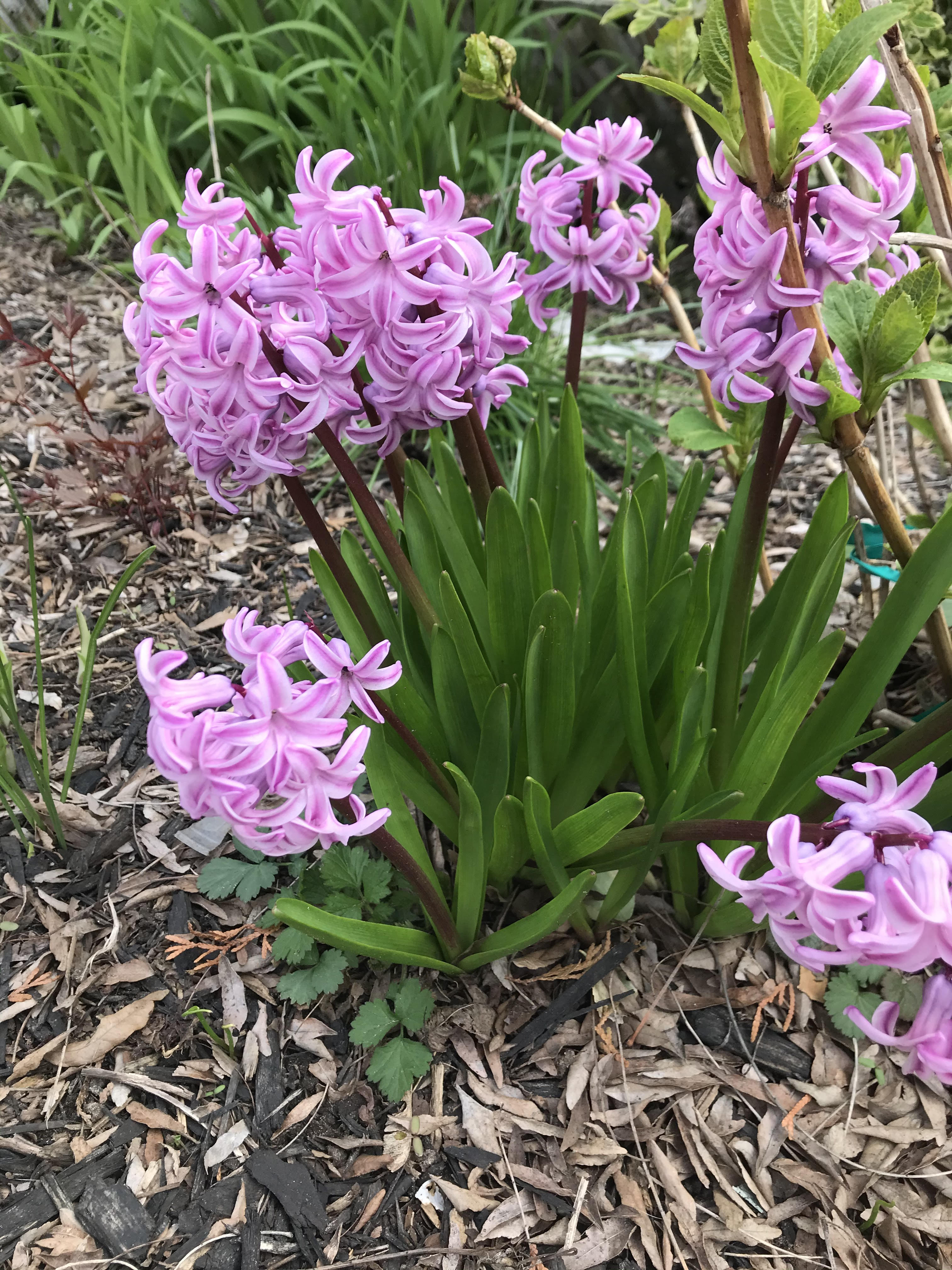
The Church’s tiny gardens at the southeast corner of Pape and Cosburn are nicely arranged with perennials including some hyacinths and tulips sprouting in spring. But they could use a little TLC. The brick garden perimeter needs some repair, and annual flowers could brighten a few bare areas. This spot has a friendly feel to it. Red benches on both sides of the church create some public space where citizens can take a load off and chat, these days with masks, both at the garden and next to the TTC bus stop.

The garden reconnaissance is complete. This guerrilla is hungry and could use a mid-afternoon coffee and muffin. Once risk of frost is past in early May, the gardening mission will begin…

Something to learn — Interview with Ann McGuire

After retiring as a teacher, Ann McGuire has a new career: life-long learner.

“In the garden, there is always something to learn – what to grow, how to grow it, when to harvest and how to cook or display it,” she says.

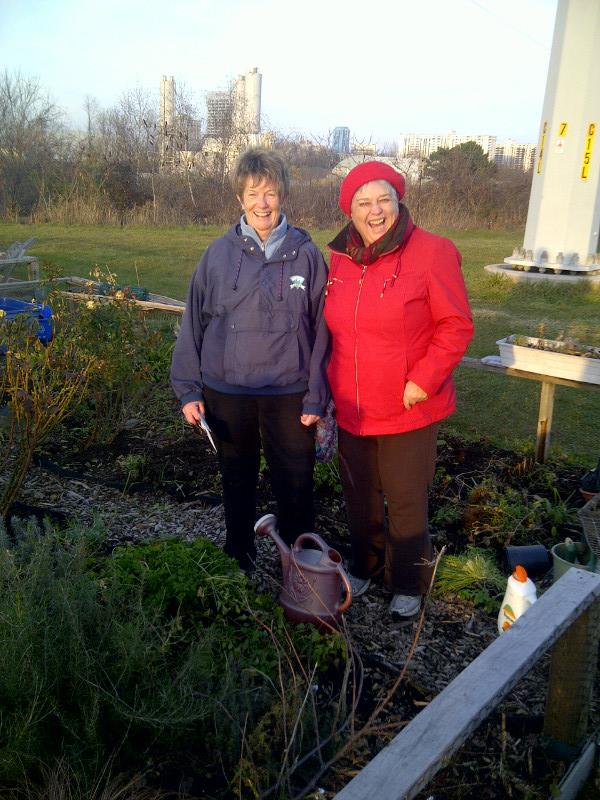
It’s late November at Thorncliffe Park Garden Club and the sun is about to set behind a lattice of hydro towers and wires stretching to the west.

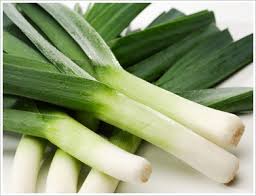
Ann has been picking herbs including sage and parsley, and has pulled up the last of her carrots. This fall she’s experimenting with her leek crop: “This is the first time I’ve left them this long. One of the gardeners told me they taste sweeter after a touch of frost, so I will give it a try.” Her cluster of a dozen leeks looks vigorous, with the younger green shoots still spiking up, and the plants’ white cores continuing to thicken. They have already survived one decent frost and look like they are in for the long haul.
Ann started in the garden in the early 2000s after retiring as an elementary school teacher with the Toronto District School Board.

“Apart from some flowers on my balcony at my apartment, I was really a novice when it came to gardening,” she recalls.

The idea of a “Potager” garden appealed, based on the French garden tradition blending the beauty of flowering plants with ready access to herbs, vegetables and berries. Ann recalls that a few of the garden old-timers scoffed at the idea of space wasted on non-vegetable crops. They were used to maximizing production of beans, onions, tomatoes and greens on their small rectangular allotments. Flowers were low on the pecking order.

At the same time they gave her some good advice. “Andy would drop by to tell me what to plant when, and how to space vegetables to get a better harvest.”

She had other gardening mentors.

Her niece Kimberley’s husband Liam grew up in a gardening family in Ireland. He taught Ann how to prune roses so the tips grow out, giving the blooms space, and how to fertilize the soil and build up the plant’s base to protect it over winter.

Her Queen Elizabeth rose was a gift from her mom Lillian, and is a reminder of her mom’s strength. “My father Bill was one of four welders in Canada who did specialized work on refinery construction and other big projects. He worked on construction across the country.” Ann’s father died young — in his 40s — of lung cancer and there was no insurance.

“My mom was a housewife with three children at home. She had been a Red Cross nurse so she went back to school in ’57 in the first class for Registered Nursing Assistants at Women’s College Hospital. She became the breadwinner.” In retirement, Ann’s mom also lived in the Thorncliffe Park neighborhood and visited Ann’s garden often.

As a novice gardener, Ann learned about rhubarb growing from her new garden friend Pauline, who shared a recipe for rhubarb squares. Garden neighbor Linda provided a recipe for baked zucchini stuffed with meat, vegetables and spices.

But it’s about more than watering, weeding and enjoying the harvest. Ann and her friend Arielah find shady spots around the community garden during the summer to hone their Scrabble skills.
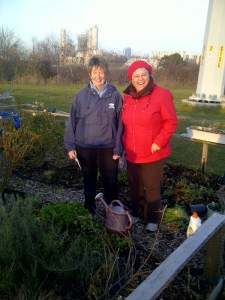
Ann and Arielah

As the late November sun sets, and the horizon blooms dark purple, Arielah has dropped by to say hi. She’s been busy putting her garden to bed for the winter. A chill is in the air and gardening days are numbered.

Ann’s life-long learning extends well beyond the garden.

“I like to take courses to learn more about something I know and appreciate, but also to try something new. I believe that you learn as long as you live,” she says.

Through the University of Toronto’s Later Life Learning program, she recently attended a course celebrating Ten Musical Masterpieces. “Rick Phillips, who hosted the Sound Advice radio show on CBC, was our lecturer. He helped the class understand classical pieces from a musical and historical point of view. After playing a recorded clip, he would use his keyboard to break down and discuss elements of the music.” Classics from Bach, Stravinsky, Berlioz and Mozart were on the top-10 agenda.

“Something new” included a course on opera. “I actually took this course because I had never liked opera but wanted to understand and appreciate it.” Ann also completed courses in art history and jazz appreciation.

Her love of music started at an early age – “my mom says I sang at my own Christening when I was two years old. I didn’t know the words but apparently I sang my own version of a hymn.” Today, Ann sings in the Toronto Choristers, a choir comprised of retired educators who practice regularly and are gearing up for a Christmas concert at a North York church in December.

On the gardening front, she has enjoyed attending garden shows to learn about new plants, ideas and techniques.

Ann has given back to the non-profit community garden, serving on its volunteer board for many years. One of the programs she coordinated involved deliveries of fresh vegetables to the Scott Mission’s daily food program downtown. One of the first residents of Thorncliffe high-rises built in the late 60s, Ann has seen the neighborhood grow into what Globe and Mail journalist Doug Saunders describes as an “Arrival City” for people from around the world – and home to Canada’s largest elementary school. “I’ve changed apartments but really wanted to stay in the neighborhood.”

The sun is down now and a cool wind is accelerating across the 100-plus plots at the community garden. This winter Ann will take a page of graph paper and plot out a new Potager garden design. “I like to change things up every year, although sometimes those plans go out the window. I will see some Pansies on sale in the spring – and I start to rearrange everything to find spaces for the new plants.”

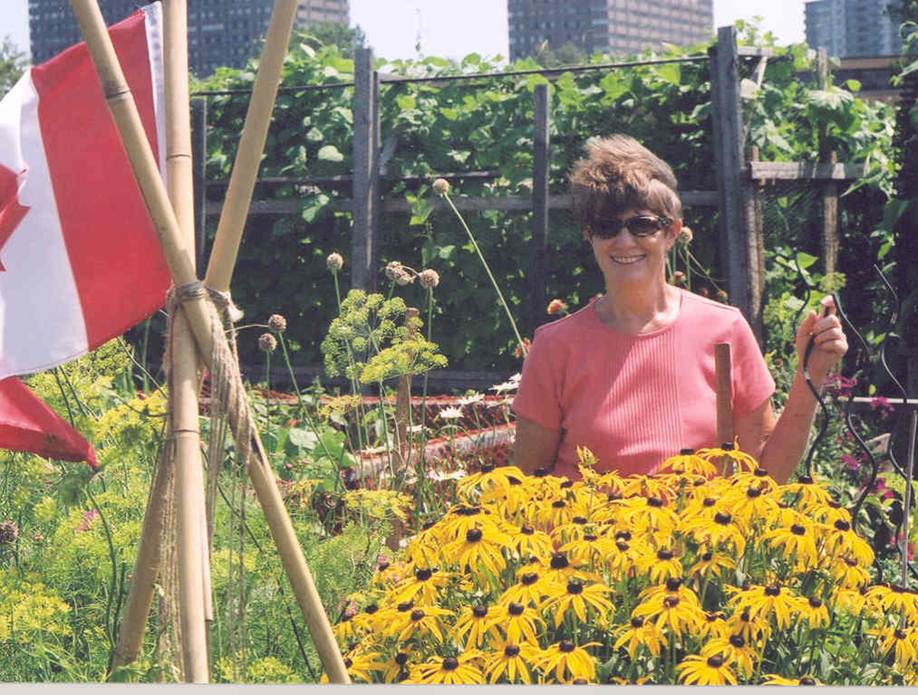
The cool breeze has induced mild hypothermia in both the blogger and the interview subject, so we retreat to Ann’s car where she shares some recent photos of her garden. In one, Ann sits in her garden under a green and white umbrella in the middle of her Potager plot. Pink roses blend with Dill. Purple flowers in the foreground give way to towering Tomato plants. A homemade noisemaker – made out of a foil pie plate suspended by string from a tall pole – is intended to ward off the occasional deer that visit the garden from the Don Valley to nibble on summer greens.

“The garden is a true community, and it’s my sanctuary,” says Ann.

A place to teach and learn.

Ann’s gardening friend Pauline passed away earlier this year. Ann promises to email Pauline’s recipe for Rhubarb squares. With the winter solstice less than a month away, the dark purple sky has already faded to black by 5:30 p.m.

Come spring, it will be time for a Rhubarb treat.

RHUBARB MERINGUE SQUARES

CRUST

  • 1/2 cup butter, softened
  • 1 cup flour
  • 1 TBSP sugar

FILLING

  • 3 eggs separated
  • 1 cup sugar
  • 1/4 tsp salt
  • 2 TBSP flour
  • 1/2 cup half & half cream
  • 2 1/2 cups cut up rhubarb

MERINGUE

  • 1/2 cup sugar
  • 1 tsp. vanilla
  • egg whites

Mix butter, flour, sugar.  Press into 9×9 pan.  Bake at 350 for 10 min

Mix egg yolks, sugar flour, salt and cream, stir in rhubarb.  Pour over baked crust and bake 45 min.

Make meringue.  Spread over mixture and bake 10 – 15 min. until nicely browned.

A special spring treat!
Garden gymnastics

In literary criticism class, you learned about “close reading” of a text. This often meant ignoring the story for the sake of deconstructing the book through a political or cultural lens.

What they should have taught you was a truly important life skill – let’s call it “close weeding.”

Who needs a personal trainer when you can drag your body through the motions of close weeding — and a variety of other gymnastics — in the safety of your own garden?

Close weeding

Close weeding TM means strapping on kneepads and crawling inch by inch through your garden rows, plucking away competitors such as crabgrass, unwanted volunteer raspberry roots, pretty but intrusive wild violets, or rampaging bindweed.

Each weed needs a different strategy. In the case of crabgrass, a sharp tug may break the grass from the roots, so you need a slow, steady pull to get the root bundle to release from the soil.

By contrast, eliminating bindweed requires a 10-year strategic plan and multi-pronged tactical assaults. Bindweed will easily give up its slender shoots and pretty blossoms, like a lizard gives up its tail to a predator. Persistent weeding of the shoots does sap the strength of the plant, but your strategic plan needs to tackle the roots as well. They bundle into tight white masses under stone pathways, and in forgotten corners of the garden. The roots may be several feet deep and require slow coaxing, and years of patience and repeated Close weeding TM, to the get them out.

Close weeding TM promotes ambidexterity. After 30 minutes of dedicated weeding, the wrist of your dominant hand is screaming in protest, and it’s time to switch.  To count down the transition, use the “four more, three more, two more” 20-minute workout method that you learned in the 1980s while sitting on the couch, watching other people exercise on TV.

The beauty of Close weeding TM? At the end of the day, if your aching knees allow, you can stand back to see the big-picture story of your garden, with your vegetable and flower protagonists advancing the plot, unencumbered by their weedy, villainous competitors.

Did I mention the fringe benefit of Popeye-like forearms?

Garden gymnastics let your plant protagonists blossom.

Rock it out

The rock garden presents a special opportunity to combine art and athleticism. You could call it Rock Garden Tai Chi.

To nurture your special patches of Flox and Lilies planted amidst decorative chunks of the Canadian Shield, and given your balance isn’t what it used to be when you were a teenager, you will need to assume the position of a Hermit Crab.

Scuttle on all fours from rock to rock. Get grounded near your patch of plants and initiate weeding, watering and mulching. As a Hermit Crab, consider adopting an umbrella as your temporary shell/home, to save on 60-weight sunscreen. Be careful to avoid spontaneous celebrations, which can cause you to stand up, pump your fists, and twist your ankle as your foot loses purchase on a rock.

Instead, scuttle again to the next plant cluster, and be sure crank your neck around to check for nosy neighbors who may be laughing at your garden gymnastics.

Let them laugh. You know that if you weren’t feeling so mellow from the meditative benefits of Rock Garden Tai Chi, your gardener’s martial arts techniques would allow you to beat them silly – in self-defence, of course.

To mitigate your sore back, quads, knees and neck the morning after, ask your family physician about the benefits of a proactive dose of Ibuprophen and Guinness.

Garden cardio

Who said gardening can’t provide a good workout for your heart and lungs, in addition to your muscles?

Sheep manure medicine ball – as the gardening season matures, good quality composted sheep manure can be found at $10-for-5-bags at your local grocer. The blood starts to flow when you see the “blow out” price, but you can really get your heart beating hauling those bags from the store to your SUV. As an added workout, bring your spouse, and use each sheep manure bag as a medicine ball. The workout resumes when you must haul each bag from your car to your garden.

5-K worm run – like sheep manure, worms enrich your garden. They produce nutrient-rich castings, with the added bonus of aeration as they bore tunnels through the soil. Wait for a light rain on a spring day. Strap on your track pants and running shoes. Poke holes in the plastic lid of a tin coffee can, and place a small amount of moist earth in the can. Take the can along on your 5-K run and scan for big moist earthworms on the sidewalk. Pick them up, pop them in your coffee tin and fasten the lid, as worms are escape artists. Run fast so you can beat the Robins and commercial worm-pickers. The excitement of finding a juicy earthworm will move the dial on your heart rate from “maintenance” to “fat burner” mode. During your cool-down phase, reward yourself with an ice-cap at the Tim Horton’s drive-through.

The dreaded John Jeavons double dig – Purchase a copy of the iconic John Jeavons how-to manual about growing tons of vegetables on less land than you can imagine. The less-land thing is related to Jeavons’ more-muscle soil preparation method, which involves two stages of deep digging, wrestling with a sharpened spade, and much grunting. It’s said to be the cardio equivalent to the Iron Man competition. Use this as a last resort if your other gardening cardio methods are not available.

******

So lose the personal trainer.

And reap the benefits of cardio, meditation, self-defence techniques and Close weeding TM, in the safety and beauty of your garden gymnasium.

Garden gifts


Perennials declare themselves in spring, like a photographic image emerging in a darkroom tray.

And, in the end, the love you take… is equal to the love you make.

Lennon and McCartney were likely thinking of gift-giving in the garden when they penned this musical footnote to the Beatles’ classic Abbey Road album.

Garden gifts are living keepsakes – with the memory and meaning of the giver permanently attached to the perennial plant now growing in the receiver’s garden.

All in the family

When my parents started a family in their almost-new Don Mills bungalow in the early 1960s, they dug in several Forsythia shrubs to line the front of their home.

My mom Sheila took cuttings from the shrubs when the snow was still on the ground. Placed in a vase of water, the Forsythia cuttings bloomed indoors to hasten the arrival of spring.

During my parents’ move years later from the family home to a condo, my mom gifted me with a final Forsythia cutting. I discovered that the cuttings root easily outdoors with some TLWWW – tender-loving watering, weeding and waiting.

My mom’s cutting found a good spot in our front garden in Riverdale. Today, 8 years later, my propagated Forsythia shows off its bold yellow bloom in spring, and optimistic greenery throughout the growing season.

I have returned the favour over the years with small perennial gifts for Sheila’s garden. Some recent examples include Trillium bulbs, Lily of the Valley with their tender white bell blooms, and strawberry plants. The strawberries are spreading a second generation across my mom’s new guerilla garden, located in the public park near her condo.

The gifted perennials surround a small circular garden she has dug around an old hollow log stump. Inside the stump bloom red geraniums, which she tends daily.  Passersby in the park often stop by to comment on this small jewel of a garden in a public park near Norman Ingram elementary school.

 “Gifts” from the abandoned garden

Our cottage neighbors Harry and Christine haven’t been seen in three years. Word is they moved to the west coast. Their Minden cottage lot, in the Haliburton region, is sprouting volunteer poplar and sand-cherry trees. Several Minden phonebooks wrapped in plastic linger on the steps. But the rhubarb patch Harry and Christine planted years ago has taken nicely in the sunny south side of a small hill.

On a May weekend, the rhubarb is mighty tempting and will surely go to waste. Plus the act of harvesting will stimulate the plant, I tell myself. With a promise of dessert for dinner at the in-laws, I pay a clandestine visit to Harry and Christine’s rhubarb patch.

To pick rhubarb, you need to investigate each cluster, zero in on the older, outer stalks, and preserve the young stalks at the heart of the cluster. To harvest, the thumb slides down to the deep red base of the stalk, and pushes hard before snapping the stalk up. The large floppy leaves may be used as a mulch around tomato seedlings that are just going in with the first heat wave of the season.

This act of rhubarb piracy turns into a fair trade when I spark up the gas mower, cut the grass on Harry and Christine’s property, and plant a mixed flower basket gift in the planter near the front door — to give the place a lived-in look. And possibly ward off cottage burglars.

Thank you, Harry and Christine, for the rhubarb. It was stewed by my wife Nadine with sugar and strawberries and served as a compote atop some Kawartha Dairy vanilla ice cream.

The inherited garden

Over at Thorncliffe Community Garden, on hydro land just north of Toronto’s “arrival city” of Thorncliffe Park highrises, my new garden declares itself. I’ve decided to change plots to a more open area of the garden, with fewer fences, and closer to the wildlife at the edge of the ravine. A new garden in spring is like a photograph emerging in the chemical tray of a darkroom, before the digital age. It’s an act of wonder and patience on the part of the photographer, as the image emerges.

This spring, peonies, rhubarb, chives, and raspberry canes have sprouted in my new garden, and a grand-daddy red currant bush sets a promising crop of berries. The plants are all gifts from the plot’s previous owner, Stacey, who has recently moved.  She came by to pick up a favourite gooseberry bush, and gifted me several dozen perennial flowers and herbs that border her garden plot, leaving them be. I will honor the gift by keeping the plants, and fill in the gaps with some tomatoes, peas, potatoes, beans and carrots. How can I repay this gift? I’ve offered to divide the Peony in fall for its original owner, I’ve left some plants in my old plot which I hope the owner can use, and have made recent green donations to fellow gardeners.

In fact, Linda has dropped by on her way to feed the birds. She is the steward of the community garden’s burgeoning wildlife population, the topic for a future blog. “Do you need any gladiola bulbs?” I ask. Linda knows I’m likely flush on gladiolas in the same way she was once flush on Irises.

She takes a handful of bulbs for her garden, possibly to humour me — a footnote that will be the prequel to future garden gifting.