
Trouble in the tiny garden

IMG_5190 October white zinnia

My mom and I had beat the heat, helping our tiny gardens survive a steamy summer. But if guerilla gardening is an act of faith, our faith was to be tested a few more times in 2018.

At the urban intersection of Pape and Cosburn Avenues, my little collection of geraniums got some kudos for brightening up a dismal corner. Still, they needed regular stewardship against occasional unkindness — with every visit, I continued to remove a motley collection of objects deposited in the flower pots:

— a McDonald’s coffee cup

— a TTC transfer

— cigarette butts

— a cigarette lighter (broken)

— and perhaps most intriguing: an empty can of Mike’s Hard Lemonade, alcohol content 8%.

Luckily a nearby city bin accepted waste and recyclables, so I regularly deposited these and other items that had been so casually tossed into the tiny garden.

One day, I noticed my Tiny Garden #3 sign had gone missing. The flowers were fine, but their signage and branding had walked away. Somewhere out there, I thought, someone has carefully conserved my rustic attempt at a garden sign. It had been fashioned on a small piece of plywood, with capital letters written in black marker, fixed to a 1×1″ stick. I am sure it is now someone’s private shrine. At least, that is my hope.

Dire news — garden thievery

Over at my mom’s little guerilla garden near Toronto’s Rosedale Subway station, the news was more dire.  My mom had headed out one day with her watering can and trowel, when a resident in her building gave her the warning: “Sheila, it looks like somebody has damaged your garden unfortunately.”

As my mom got closer to her beloved tiny garden, she spotted gaping holes left by a thief who had made off with geraniums and zinnias — roots, leaves, flowers and all.

As a long time community gardener, I am accustomed to having things walk away from my plot — the worst theft ever was of my entire red currant bush. On a recent visit to my plot at Thorncliffe community garden, my neighbor Boris showed me how thieves had jumped his fence to make off with bags full of cherry tomatoes.

To catch a thief

I sympathized with my mom.  At the same time I tried to give her some context: “Mom, remember that hundreds of people have enjoyed your garden. It’s just one person that has damaged it.” That may be true but the idea can feel a bit trite to a gardener who has carefully nourished plants over months, only to see them disappear in an instant. She considered the thievery to be a beastly act, and I agreed.

I was reminded of a newspaper clipping my uncle Ray had once sent me in the mail from the UK. He knew my interest in community gardening, and he had heard about my stolen red currant bush.  “ALLOTMENT GARDENER GIVES BOTH BARRELS TO VEGETABLE THIEF,” the headline screamed. The story went on to describe how the gardener had laid in wait overnight with his shotgun. He was now facing a manslaughter charge. I empathized with the man’s stolen veggies, but thought his method was a bit extreme.

Abandoning the tiny garden

What can you do? We tried replacing a few of mom’s plants with some new ones, only to see them disappear from her plot. She was heart-broken. Twice bitten, thrice shy. She decided to give up her tiny garden.  She started taking another route on her daily walks. Friends in her building commiserated with her plight.

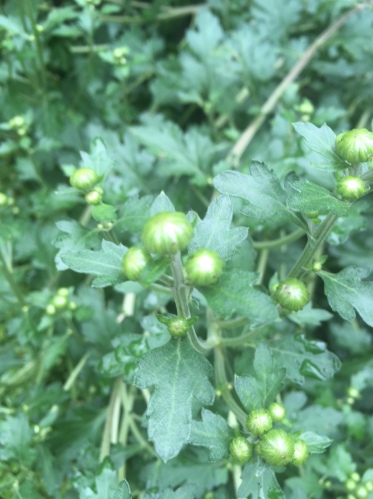
I held out hope, though. On a recent visit with mom I asked her if she had been by to visit her tiny garden at all. She admitted she had recently taken some scissors to trim back the weeds next to the path, and a trowel to dig over the soil a bit.  Some geraniums had made a comeback in the fall, pushing out red blooms, she added. And the original mums we had planted behind a hollow log in the spring had started to bud up.

Holding out hope

“They are late bloomers mom, they will put on a pink show for you in about a month.”

Mom said she would keep an eye on things and hope for the best.
IMG_5189 October mums

Late bloomers and theft survivors: Mom’s mums in October 2018. At top, a remaining pretty white Zinnia in mom’s tiny garden, October 2018.


Tiny garden double-double

IMG tiny garden double double

A network of good Samaritans had helped my tiny garden survive the summer heat wave in T.O.

One of them, my friend Reshmi, donated an unused planter to the tiny garden cause.

Fall days were shorter and cooler and kids headed back to school, sporting their colourful backpacks. As the population of citizens at the gritty north-west corner of Pape and Cosburn swelled, I delivered the tiny garden double-double.

On a mission

It was another gardening SWAT team mission of sorts.  With my minivan illegally parked on the north side of Cosburn to avoid a 2-buck parking fee, I executed my sortie with maximum efficiency.

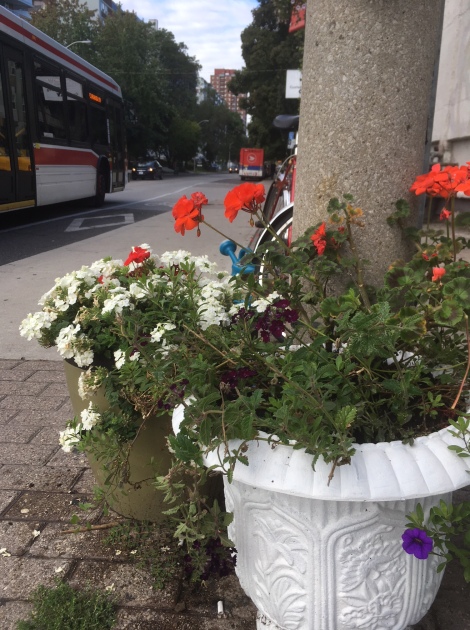
First, I hauled a bucket of soil and the new pot over to the corner of Pape and Cosburn. I had placed some bricks in the bottom of the white pot for drainage — and to deter tiny-garden thieves who might find the new garden a wee bit heavy to make off with.

Next I ran back for some orange geraniums and my trusty blue plastic watering can. I decanted half the soil into the white pot, then put in the geraniums, followed by a top dressing of soil. The new pot, and its older companion tiny garden in a green pot, got a good soaking of water.

The next day I wobbled over on my red beater bike to check progress. The gardens were looking healthy with cooler weather and some sunshine.

Two thumbs up from Leo

Leo stopped to say hello. He comes by his name honestly. He is the lion-hearted crossing guard at Pape and Cosburn, helping hundreds of citizens cross safely each day at the start and end of school, and the lunch hour.

Leo had dubbed me “the mystery guy with the flowers” earlier this spring. He had been off during the summer so I introduced myself again:

“I decided to dress up the corner with some flowers,” I told him. “I live nearby.”

“Well it definitely needs it,” Leo replied. A bustling dry-cleaning business had closed down four years ago. “The guy who bought the business is doing some work on it, but it’s been awhile,” Leo added. Citizens still took shelter from bad weather under the former shop’s rough entranceway and steps at the corner.

Leo had a burning question for me: “Did you need any permits or anything to put the flowers here?”

“No, I guess it’s a guerilla garden,” I said.

Starting a trend

Leo had to go — he was brandishing his stop sign for the next wave of pedestrians: “Well it’s nice,” he said — “I hope you are starting a trend.”

I came by a few days later to water the garden but it looked like someone had done that favour for me — perhaps another good samaritan.  I picked off a few geranium bloom deadheads and removed a black and yellow Mike’s Hard Lemonade Can that had been placed next to the flowers.

The lemonade can boasted an alcohol content of 8%. It was empty. I hoped its owner, like Leo, had gotten a kick out of my tiny garden double-double.


Warming up to my gooseberry bush

It’s taken 15 years but I think I am warming up to my gooseberry bush.

I inherited it from the previous gardener at my Thorncliffe Park Community  Garden plot. It was a sprawling, spikey green thing about three feet tall and wide. I gave it sideways glances while I planted more important crops, like tomatoes and beans.

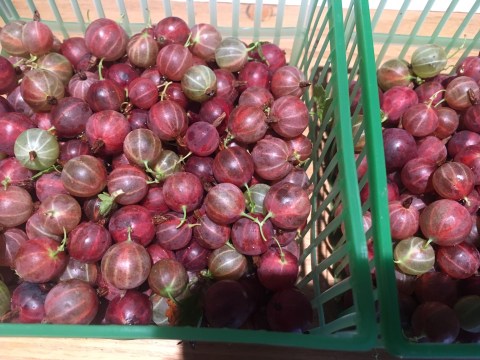
But in July, the gooseberry bush could not be denied. It bore loads of berries, pin-striped, like plump little new suits from Tip Top Tailors. They ripened from green to a deep purple in the full sunshine and long days of summer.

IMG_2393

I got scratched picking hundreds of them. My crop was donated to my father-in-law, Claus, who made gooseberry jam for the family at the cottage.

Through trial and error, I learned how to pick the berries while avoiding the nasty spikes, I would hold the top of one branch in my fingertips, pulling it up and away from the others, and carefully strip it berry by berry with the other hand. The spikes actually drive away birds and other critters — including humans — meaning you keep more berries for yourself.

Counting berries while you pick doesn’t hurt — you can give yourself a goal of 100 or 200 to see past the pain of your sore back and joints while you slowly circle the bush on bended knee. Folks in the corporate world have told you to lean in for success. The same principle applies for gooseberry picking.

I also learned how to propagate my gooseberry bush — this is a fancy gardening term for making babies.  To make a baby bush, grab a low-lying branch in spring, push it into the soil and bury part of the branch a couple of inches down. Leave some leaf exposed to the sunshine at the tip of the branch.

Over the fall and winter, this “layered” branch will put down roots. In spring, you can snip it from the mother bush and plant it elsewhere.  I took one to the cottage, where I now have a second nice mature gooseberry bush. I have given a few baby bushes away to gardening friends.  It`s the gift that keeps on giving.

If you are the foraging type, you can spot wild gooseberries along Ontario roadsides — they even sport spikes on the berries themselves. I`ve heard tell you can somehow defang them and use them for pies and jams. Or maybe just jelly, leaving the fangs in the screen before you boil up a batch. You`d have to google it.

IMG_2392.JPG

This week, Mehtab helped me pick a couple of pints of gooseberries at Thorncliffe Park. Claus passed away this summer and Ann has tried her hand at the jam making, with delicious results. Both Nadine and I have picked gooseberries in Toronto and Minden for Claus and Ann. So this next bunch will go to Ann in the hopes of jam batch number two.

I am sure there are more gooseberry dishes out there for the making. Rather than check Google, I consulted the Joy of Cooking 1997 edition and discovered that Gooseberry Fool was a popular dish in 17th Century England, blending custard and stewed gooseberries. The modern version involves pureed gooseberries and whipped cream.

Call me a gooseberry fool — but I think I am warming up to my gooseberry bush after all these years.


Growing greens close to home — the whisky barrel method

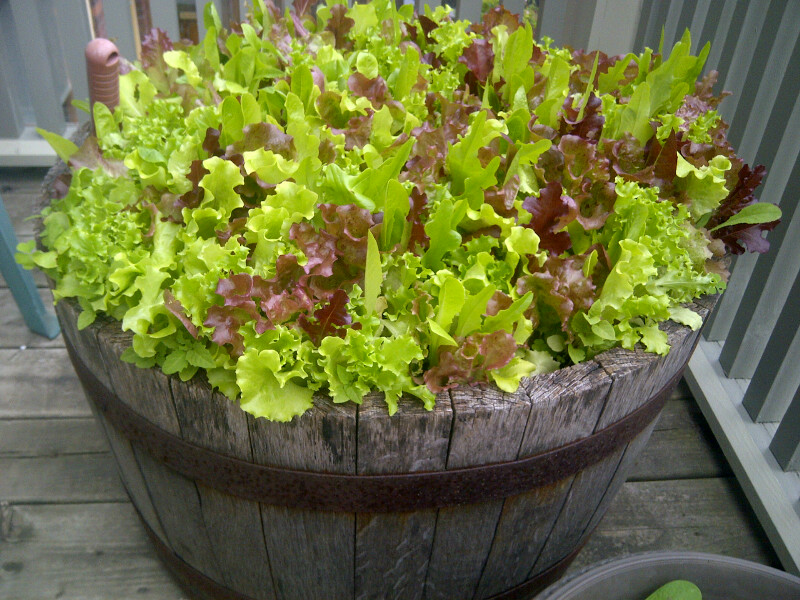
IMG-20130612-01184When it comes to tender salad greens, you need to be able to seize the moment. To harvest at a moment’s notice, it’s best to keep them close to home. So you use the circular elevated oaken growing medium system — also known as the whisky barrel method.

A few years back you were headed home in the minivan when you spotted a discarded whisky half-barrel, sturdily made of fitted oak strips bound by metal hoops. It had fallen out of fashion with your neighbor and had been placed hopefully on the boulevard. You knew the barrels sold for $29 at Home Depot so in a flash the whisky barrel was into the hatch of your Windstar.

You heaved and grunted the barrel into place on your balcony and dreamed of spring. Late at night while you were still wired from winter pickup hockey, you cruised the William Dam Seed catalogue looking for the perfect salad mix. You settled on a $1.95 packet of Healthkick Salad Blend, a special mix apparently high in phytonutrients. You didn’t know what that meant but, as an omnivore, you knew it was better than the single classic combo at Wendy’s.

When the ice melted on your balcony, you drilled a few holes in the base of the barrel, placed a few rocks and broken clay pots into the bottom for drainage, and started hauling soil to fill it. You mixed in some peat to retain moisture, and added a token earthworm to aerate and fertilize the soil. You sowed the pack of seeds, then watered, weeded and waited.

A month later the whisky barrel was stuffed with greens. You began to harvest for salads, picking a leaf or two from each plant so that the plants continued to grow.

For the next month, your barrel grew like a Chia Pet, putting at least a dozen good-sized salads on the table. The fresh-picked lettuce with augmented with chives and onion greens grown in smaller pots.

The whisky barrel method offered several advantages — as a raised bed, it allowed easy weeding. Its size meant it could hold water for four or five days at a stretch, even in hot weather, reducing the chance of a wilted crop from a smaller pot. Its proximity to the kitchen made it easy to harvest and to whip up a salad with dinner on the go.

You got so excited by the success of the whisky barrel method that you took time-lapse photos of your crop every week or so, and tried to show them to your wife and kids. They were not amused by the pics, but kept eating your salads.

Over the years you experimented with other whisky barrel crops — early Arugula, lush Bloomsdale Dark Green Spinach, a Mesclun mix of unknown exotic greens, and the herbal quartet of Parsley, Sage, Rosemary and Thyme.

Your collection of whisky barrels grew as you spotted other barrels discarded by neighbors and allowed yourself the luxury of forking over $29 for a new barrel from Home Depot.

In late summer, you replanted the barrels and continued to harvest well into the fall. The ultimate crop was a vigorous Bok Choi that lasted on your balcony into late November. Before frost set in, you added home-made compost to pay forward next year’s crops.

As you hit middle age, you looked back wistfully on the time you had manhandled the heavy barrels up the stairs to your balcony. You took pride in your environmentally friendly growing system — and began to think that if you ever sold the house, you’d probably leave your gi-normous whisky barrels on the balcony — as a gift to the next owner.