Doing my hearing homework

Would you consider it “work” to listen to a favourite album?

That’s how it felt as I slowly became accustomed to the new sound system in my right ear. The cochlear implant had been installed surgically by Dr. Lin and the team at Sunnybrook Hospital in late 2017. Hearing speech in that ear was better already, but music tended to sound chaotic; I avoided it.

The first few months, my homework had been focused mostly on the sound of language. I streamed two programs directly into my right ear from my Ipad, and made educated guesses about the words, sentences and sounds I was hearing.

An online program called Speech Banana focused piece by piece on all the consonants and vowels in the English language. Another program, Angel Sounds, explored language as well as environmental sounds such as a dog barking, or a siren wailing.  It also featured a music test to distinguish different pitches. I had a tough time with that one, often hearing the same note when, in fact, it had risen a whole tone or two (shown on a visual chart). Gah!

speech banana

But with practice, I got better. My brain was getting accustomed to a new auditory input. I tried to put in an hour or two of listening homework each morning. My scores increased. I added my left ear to the mix, with its conventional hearing aid and sometimes distorted hearing.

To inject levity, I watched Stephen Colbert’s daily YouTube clip — basically his take on world news and clever skewering of the orange-haired one and his antics in the U.S.  Then I added the two Jimmys — Fallon and Kimmel — to my hearing homework.

The combo of video and sound helped a lot. Even for a person with normal hearing, seeing someone’s lips improves comprehension.

I was nervous about adding music to the mix, as the Meniere’s condition in my left ear still created distorted sound. Singer Huey Lewis recently spoke about the impact of Meniere’s, and how he had to stop performing when he could no longer sing in key. I posted a comment to Huey’s Facebook page wishing him the best, hoping his condition may stabilize or he may find hearing technology that will bring the music back.

Stories and emotions

YouTube certainly had a tempting variety of music. I searched for Lennie Gallant, an east-coast folk musician we had seen perform live a couple of times. Once, during a break in his performance at Toronto’s Hugh’s Room, I had found myself side by side with Lennie at the urinals in the men’s room. Thinking it was not the best time to bother him, I chatted with him later that night and bought his CD, When We Get There.  I grew to love its mix of stories and emotions, including songs sung in both English and French. A musical craftsman.
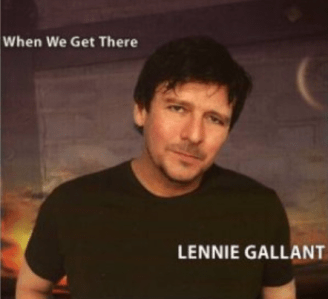
Lennie

My daughter Ali had once played Lennie’s music on her laptop for me while we drove to her university home in Hamilton, Ontario — holding the device close to me in the car while I was having a rough spell with my hearing.

Now with my YouTube search, up popped Lennie’s song about love and loss: Pieces of You. I pressed play. I had not heard it in a couple of years but knew the song well and could immediately lock on to the pitch and melody of his vocal.  Seeing Lennie sing it helped me hear it as well. The music mix slowly came into focus in the background. I felt hairs tingling on my neck, knowing that there was some hope to enjoying listening to music again.

Listening to music is work, though. Another favourite album was Gordon Lightfoot’s A Painter Passing Through.  It is a hidden gem among his more popular songs and albums. I dropped my CD into the player in our kitchen and winced at first when I heard the first song, Drifters, a tribute to the cast of characters in bars and music joints. Focusing on Gordon’s vocal, I could slowly put the rest of the mix into place.

A fuzzy image comes into focus

I could follow the bass progressions a little bit.  The percussion sounded crisp. The song was coming together like a fuzzy photograph coming into focus.  I was hearing it through the triangle formed by 1) my memory, 2) some amplified hearing in my left ear, and 3) a new implant in the right ear, delivering sound straight into the cochlea:  “Whether it’s right or wrong, the words of every song, remind us of the love we knew when love could not go wrong, in yesterday…”

When I say that the first factor to hear a familiar song is my memory, what I mean is that my brain knows what the song should sound like.  Somewhere in between that memory and the actual new sound input, there is a fusion of sorts.

I made a habit of playing the CD while preparing supper. Each time I listened, Lightfoot’s musical tapestry became more vivid.

I had a few hearing homework setbacks, like “The Completion Backwards Principle,” a classic album by The Tubes. It is a zany, rock music spectacle with a satirical premise, but music better left intact in my memory at the moment.  Too chaotic for me to follow these days.

Finally, a friend had mentioned a top-flight Scottish percussionist who also happened to be deaf: Evelyn Glennie. I found her TED talk on line….
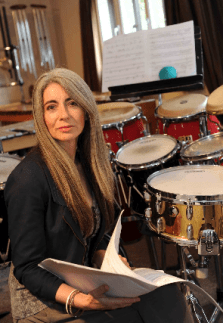
Evelyn Glennie

Evelynn had lost most of her hearing as a young girl. As she pursued a career in percussion, she experienced music not just through sound but through sight, feeling, intuition, and the kinetics of the human body.

In her TED talk, as she approaches the marimba to perform, Evelyn takes off her shoes. Percussion and music can be experienced through the feet, arms, hands, head.  The body as a resonator — the mind open to experiencing music in multiple ways.

Evelyn is not just an internationally known percussionist, but a champion of music for all, including people with different abilities. She has pushed the music education system and community to see beyond prejudice, to see a universe of musical opportunities for us.

Such rich musical artistry and ideas. So much hope.


Hearing the drums: Who is your favourite?

“Who is your favourite drummer?”

The question caught me off-guard. I was having a post-game beer with three recreational hockey buddies at Amico’s, a gritty Italian eatery on Queen Street West in Toronto. The joint is known for its delicious $10 pasta specials, pizza, and selection of beverages, as well as for its cast of characters and 4 a.m. closing time.

I had set music aside about five years earlier after my remaining good ear — the left one — went haywire from a condition called Meniere’s disease.  I had stopped listening to music as the distorted sound was too painful, physically and emotionally. I could no longer hear the musical tapestry or pitch of a Beatles’ song, or a big band number.

I had also stopped playing music — no longer hacking around on piano and guitar at home. My drum kit was on permanent loan with the band of a jazz pianist I used to play with occasionally. Playing drums with rock bands, concert bands and a percussion ensemble were distant memories.

But after receiving cochlear implant surgery a couple of years ago in my right ear, and using a conventional hearing aid in my still wonky left ear, the music was slowly coming back.

IMG_2410 drum pic

Steve Smith took this freeze-frame image of my hands playing the snare in the mid-80s. Reflected in the background, some older guy uses his iPhone to recreate the photo. 

So when my friend Joe — the stalwart goalie of our McCormick Arena hockey group — asked about drummers, I had to pause.

“I guess I have to go back a few years,” I told him. “Some of my favourite drummers were not virtuosos — they were part of the sound of some of my favourite bands: The Guess Who, Max Webster, and April Wine.”

Sound and mood

Take Garry Peterson, the drummer for Winnipeg’s The Guess Who. His crisp, cool and economical style was the cornerstone of a mesmerizing sound on songs like “No Time” and “American Woman.” He didn’t get in the way, or take the spotlight in tumultuous solos — he was a key part of a special musical fusion. Same goes for Gary McCracken, the original drummer for Max Webster, an innovative and zany rock band out of Sarnia, Ontario. He had an energetic but fluid style that seemed effortless through mood and time changes on a song like “The Party.”

I was blanking on the name of April Wine’s drummer. My friend Steve, who has an encyclopaedic knowledge of rock, quick thumbs on google search, and a heavy slapshot, came to the rescue: “Jerry Mercer.” Jerry lays down a powerhouse beat on “I like to rock” that is a key part of the musical mix. The YouTube video of that song is heavy, campy and joyous. You can google it.

A drumming showman

I said that I did appreciate one virtuoso — jazz drummer Buddy Rich. I was lucky to see Buddy live several times in Toronto, at Seneca College’s Minkler Auditorium. He was a grouchy taskmaster, slumped over his drum kit, leading a band of hot young players from across the U.S.  He would lay into an opening beat and shout out the score number — sending his bandmates flipping through their musical charts to be ready.

buddy rich

Buddy Rich — in the zone

In his drum solos, Buddy was a showman.  He set musical themes and used contrasting times and volumes to develop them, often with high drama — like when he brought his snare roll to a bare whisper, or used only his cymbals to repeat the theme.  The thing that was obvious about Buddy: musical was a language he learned at a very early age. Through his drum solos, he told stories.

As we chatted over beer and pizza, my friend Dwayne mentioned the modern-day You Tube musical café of rock-soul singer Darryl Hall — he of Hall and Oates fame. Dwayne, who had played high-level hockey in his home province of Saskatchewan, noted that Darryl would team up with musical friends. They were reinterpreting old hits with a mix of new and old talent, including some great drummers and percussionists.

I replied that as my hearing came back I had gotten hooked on YouTube videos where drummers break down classic beats.

Mastering the half-time shuffle

One example is Jeff Porcaro’s half-time shuffle on Toto’s hit, Roseanna. Jeff was in the spotlight as Toto’s drummer and was also a sought-after studio musician.  He invented complex rhythms that came off clean and understated in his performance. His half-time shuffle, which he adapted from other drummers he loved, uses a tricky triplet hand pattern and a hard snare back beat on the third note of a four-four bar. In addition, the bass drum plays a kind of bossa nova syncopation over two bars.

Jeff died young unfortunately, but his inspiration keeps the beat. Many drummers have celebrated Jeff’s half-time shuffle by breaking it down on their YouTube clinics. After watching a few of those videos, my hands and feet were twitching. I realized I could play Jeff’s shuffle in my mind, albeit at a very slow pace.

At our Italian eatery, I could hear my friends better, and even catch the pasta specials when Melissa came by to take our order. (This particular evening was the second last before our ice rink and bar were shuttered for the coronavirus pandemic).

Blazing drum battles

Joe said he had been more into sports than music in his youth but remembered the joy of competitive ballroom dancing to swing music as an adult. Dwayne recalled watching Gene Krupa, another top-class showman drummer of the jazz era, and some of the drummers showcased on Johnny Carson’s late-night show. Carson himself was a decent drummer, but his house band, including drummer Ed Shaughnessy, became an incubator for some great drummer wizardry over the years. Shaughnessy went toe to toe with Buddy Rich, for example, in a blazing duel of drumming talent. Then Buddy took a comfy seat with Johnny to trade jabs about music and life.

One of Steve’s favourite drummers was the late Neil Peart, top-flight drummer of the Canadian progressive rock band, Rush. Neil and his bandmates Geddy Lee and Alex Lifeson “had the chops and sounded way bigger than a three-some,” Steve said. Interestingly, one of modern drummer Neil’s big influences was… jazz legend Buddy Rich. When Buddy died, Neil paid tribute in a drum solo channeling Buddy’s style.

Our talk triggered many musical memories. I was starting to listen again, and dream about drumming.


Bilateral meniere’s and my cochlear implant — two years on

In fall 2017, the team at Toronto’s Sunnybrook Hospital gave me a new sound system, replacing the impaired natural hearing in my right ear with a cochlear implant.

After hearing some mysterious beeps when the device was first activated at the clinic, I could suddenly sense my spouse, Nadine, speaking next to me on my right side, without swivelling around to look. “You’re hearing me better already,” she told me.

A couple of nights later, I went out with some friends to have a beer and shoot pool. The conversation felt easier. I could sit back and understand perhaps 75 per cent of a free-flowing conversation. Before the surgery, I would have been straining to catch even 40 per cent, using a combination of bad hearing in my left ear, some lip reading, guess work, and bluffing.

I now had a clunky sound processor perched on my right ear, delivering sound to my inner ear via cables, magnets and electrodes. But vanity be damned. Any sheepishness I felt about the apparatus was eclipsed by a sense of ease and wonder at the new sounds — even simple environmental sounds, like drips from the coffee maker.

Ian processor

Later that week I went into the bank and chatted with the teller — something that would have been intimidating before the implant.

The new sound was different — people’s voices sounded distorted, sometimes Darth Vader-ish. Certain musical sounds, especially percussion, sounded crisp and pure; however I was having trouble absorbing the full mix of most music. Meanwhile, I retained some limited and slightly distorted hearing in my left ear, using a conventional hearing aid. My brain was slowly adapting to this strange fusion.

Two years on, life with the cochlear implant has become the new normal. And sometimes we take good things for granted. So it’s important for me to look at the big picture of my journey — including some wins and continuing challenges. Here are a few:

One-on-one conversations

This had been my biggest challenge in the year or two before the implant. At work, my managers and colleagues helped with some workarounds. For example, my colleague Mike volunteered to join me to interview a patient with schizophrenia who was about to make the big leap to community care.  Mike’s notes from that meeting filled in huge gaps related to my hearing trouble, and allowed me to tell the story. Still, each day I had less confidence speaking one-on-one. I approached some conversations with dread, wondering if I could function.

Following the implant, that simple act became easier, starting with the first time I could hear Nadine in my right ear. Or skyping with our daughters Ali and Colleen.  Life’s simple pleasures were sometimes simpler again.

“Deaf mode”

When I had the implant surgery in 2017, it took away almost all of the natural hearing remaining in my right ear.  The good news: when my new cochlear processor was operating, things were much better. But in situations where my processor was turned off — bedtime, sports or swimming, for example — I had to get used to an almost full-deaf mode.

I am still not used to it. I wake up in the morning in a fog of deafness. I start to feel better once my hearing devices are turned on. The coffee helps too.

At my weekly hockey game, I remove both devices — my implant processor, and the Bernafon hearing aid in my left ear — so they don’t get wet when I play. As a result, I am not much of a conversationalist on the bench. Most of the players know, and it’s okay. But I still miss the ease and fun of chatting during a game.

I could learn from a friend of mine who also has a cochlear implant — he takes out his hearing devices and meditates, fully accepting his deaf self.

New learning

After retiring early from my communications career from stress related to my hearing dysfunction, I am trying to restructure my life and purpose. Learning is lifelong and I am taking new directions in learning and teaching. Lectures in subjects ranging from architecture to politics, offered by University of Toronto’s Continuing Education, made me put on my thinking cap. Using stone-craft techniques learned at Haliburton’s School of the Arts, I built a series of dry-stone terraces at our cottage.

I took tentative steps towards teaching.  The best result has been a new tutor role at East York Learning Experience. My student — who is just a year or two younger than me — is learning computer basics such as email and web navigation, and also brushing up on his reading and writing. We learn together. He reads slowly but understands deeply; we have some amazing discussions about books he is reading. The other week I had a big smile on my face when I received my student’s first email to me.

In another small foray into teaching, I was able to share some of my corporate communications experience with professional-writing students at York University.

Meniere’s disease

Meniere’s involves a fluid build-up that causes periods of vertigo, hearing distortion, hearing variability, and a steady overall hearing loss. I have this condition in both ears. Meniere’s is said to take its own course, and treatment is focused mostly on relieving symptoms such as nausea from the vertigo. Meniere’s took away my hearing to the point where conventional hearing aid technology was not cutting it, and I qualified for a cochlear implant.

Since the implant two years ago, I’ve had several bouts of Meniere’s-related vertigo in my left ear, but have had little or no symptoms in my right ear — the one with the cochlear implant.  So that’s been a blessing, and it implies that if I ever have cochlear implant surgery in my left ear, it should reduce Meniere’s symptoms there too.

Music

Playing and listening to music were a big part of my life. When my hearing became distorted and muted before the implant, I gave up both. Some favourite songs sounded like garbage — it was too painful to try to listen.

I’ve taken some tentative steps to play and listen again.  I’m giving myself a homework assignment this winter to get back into it with more vigour.  When it comes to familiar music, I have a magic triad going for me — the three-way links between my brain’s memory, my new cochlear sound system, and my remaining distorted natural hearing. That combination means I can at least make progress on music that is familiar.

The biggest challenge with unfamiliar music is locking on to the musical key, and interpreting the musical mix. I’ll give you an example: I went to see a saxophone quartet recently at an event hosted by the Don Mills Public Library, back in my old suburban stomping grounds. The quartet — Sidecar 78 — channels a range of classical, pop, jazz and seasonal music in a tight style. At this concert, I found that when I knew the tune and could lock on to the melody, the complete musical picture came into focus — like a big inky blob on a Rorschach test suddenly revealing a familiar face.

Favourite songs like Stevie Wonder’s Sir Duke — a tribute to Duke Ellington — and Henry Mancini’s theme to the Pink Panther — came into sharp focus for me. At the same time, I struggled to find the key signature and melody in songs I did not know.

At Sunnybrook Hospital, researchers are studying the ability of cochlear implant recipients to listen to music.  Next week, I will have 50 electrodes attached to my head while I listen to classical music duets, and focus on just one instrument. I hope that research like this will continue to improve the precision and effectiveness of hearing devices such as cochlear implants and hearing aids.

The final part of my musical homework this winter will be learning some classic snare drum solos. Wish me luck.

Ian1