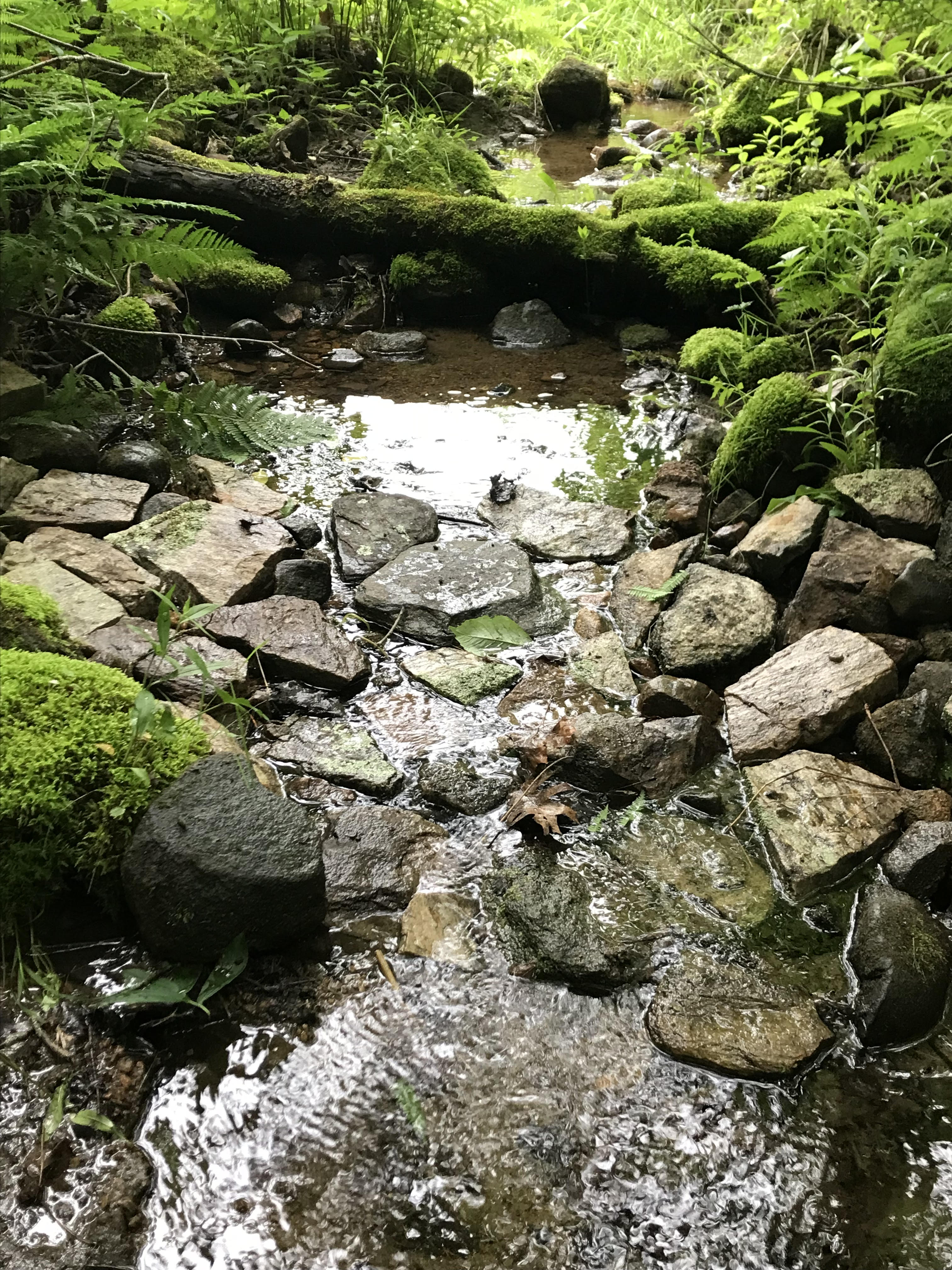
To my surprise, Kinross Creek is still burbling on a visit in late June, 2023. I had suspected that this little creek, which carried away the spring run-off from a melting snowpack, would be dry by now. On the other hand, we’ve had a few periods of heavy rain lately.
The creek drains a mostly forested watershed north of Minden, Ontario, next to a hydro corridor and abandoned farm. It’s a green and peaceful place.
My goal today is to build a little “check dam” using about 50 stones I gathered on previous visits to the creek. These stone features are used particularly in arid climates to “check” or delay the flow of water in a creek or river.
Arid areas in places like India or Arizona sometimes get heavy rains, so a series of check dams can preserve some of the water before it runs off. The word “dam” is somewhat misleading, as these features delay water flow but do not stop it entirely like some dams.
Minden is not an arid place, although we’ve had spells of drought in summer. But I like messing about with stones. So thought I would try building a few check dams on my favourite little creek back in the bush.
Kinross Creek already features some small ponds created by deadfalls of trees, so my plan is to enhance those pond features by adding some local stone. There’s no shortage of stone in these parts: the first farmers spent a lot of time clearing stone and placing it in piles and rows so they could grow crops and pasture cattle.
Building a tiny dam — check!
One design I came across is called the “one-rock dam.” Another misleading title. The dam is in fact one-rock high, but built out of many rocks. And again, it’s not a dam, but more of a stone feature that checks the flow a bit as the water runs through it. The check dam also blends in with nature by following the contours of the existing creek bed.
The first step is to place a few slim, flat stones in the centre of the creek. These will act as a splash pad, as most of the flow will be directed over them. Then I use progressively thicker stones to build out the one-rock dam upriver and to the sides of the creek. Finally, I use small stones to fill gaps in the bigger stones. I’m following methods of some folks from different parts of the world who have shared their one-rock-dam methods on YouTube, often under the permaculture theme.
I find myself placing stones with one hand and swatting away mosquitoes with the other. Above, a big crow is commenting on my work with his rough cry.
A crow commentary
Last time I was here in May, the forest was filled with birdsong. Today, there is just one black American Crow, high in the trees. Is he mocking me? Perhaps all the songbirds I heard before are napping now, or were just stopping here before on their migration north.
The creek seems to appreciate my efforts. The water gathers and flows through the centre of the stone feature, dancing around the stones along the way.
My next goal is to build a slightly bigger version of this check dam just downstream. If I get it right, this will create a small pond, with an overflow.
There are many deer in these parts, especially in winter. When snow was still on the ground in April, I saw their countless trails crisscrossing in the woods. So given there are rarely humans here, perhaps the deer will appreciate my pond. Maybe they’ll stop here to have a cool drink.
I’ll be back next month. If the creek has dried up by then, all the better for building the next little check dam at Kinross Creek.
 kinrosscordless