
As a young girl in Winnipeg, Keli Schmidt couldn’t keep still. Her mom, who nicknamed her daughter “Hurricane Keli”, enrolled Keli in a Kids Can Sew course. “I found that the skill of sewing slowed me down,” recalls Keli. “It was meditative.”
Thirty years later, she operates the Haliburton Clothing Co, drafting, cutting and sewing women’s and men’s fashions. She also brings her sewing talents to the Haliburton SIRCH Repair Café, giving a new lease on life to garments that might otherwise be tossed away. In 2024, Keli and other volunteer fixers at SIRCH repaired more than 500 items ranging from electronics to small appliances, clothing, jewelry and more.
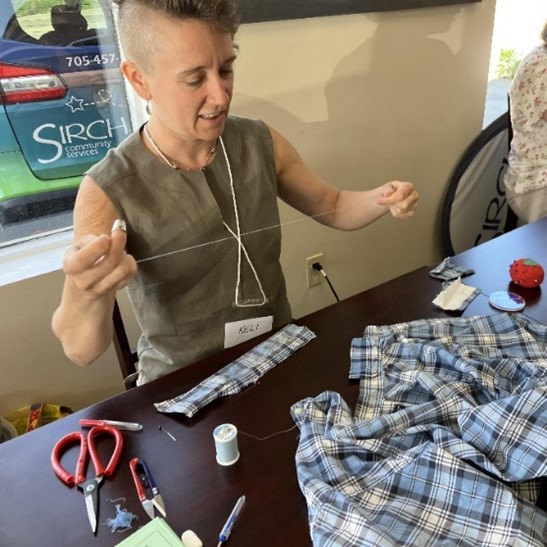
Can you tell us what you are repairing today?
This is a men’s cotton short-sleeve shirt in good condition except for the collar, which is often the first thing to go. I am removing the top collar, and will use some pieces of it to reinforce the stand, which connects the neckline to the collar. This will turn it into a mandarin collar style.
How do you describe your craft?
I would say I am a sewer-fixer and enjoy repairing anything from shirts, pants, boots, jackets, zippers, snaps, you name it. The correct term is “sewer” rather than words like “seamstress” or “tailor”, which are gendered. I am also a compulsive maker: Bees have to make honey and I have to make clothes.
How did you learn about the Repair Café?
Actually, I previously brought my fabric cutting machine here to be fixed. I wanted to give back, so here I am. We want to find a way to extend the life of good garments, but in some cases to make them better. In the case of this shirt, the slimmer collar is better for hot summer weather.
What challenges do you face in your profession?
The dominance of fast fashion presents many problems. Since most manufacturers are only concerned with price, it’s difficult for me to find good-quality fabrics. Clothing has been devalued, especially for younger people who have grown up with fast fashion. This has resulted in the decline of fashion manufacturing in Canada, where minimum wages are higher than the foreign countries where most of our clothing is made these days.
I use my brand as a platform to talk about social justice in the context of manufacturing.
How does the Repair Café help?
There are environmental and social benefits to repairing clothing. We should all be looking at ways to reduce and re-use. And of course you’re also saving money along the way.
Keli completes the shirt repair, using a needle, thread and thimble to hand-stitch the repurposed collar for another happy customer at the SIRCH Repair Cafe. It’s the same “ethical Canadian slow-fashion” approach she uses to making garments in Haliburton – a counterpoint to today’s fast-fashion trends.
For more information, you can visit her web site at haliburtonclothingco.com
For more information about SIRCH Community Services in Haliburton, and the SIRCH Repair Cafe, please visit: http://www.sirch.on.ca
 kinrosscordless